



What's Happening?
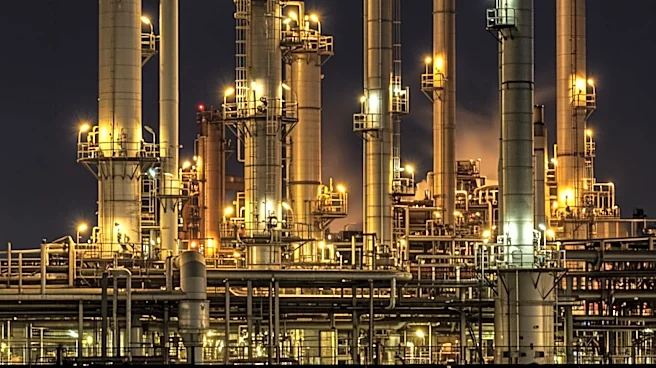
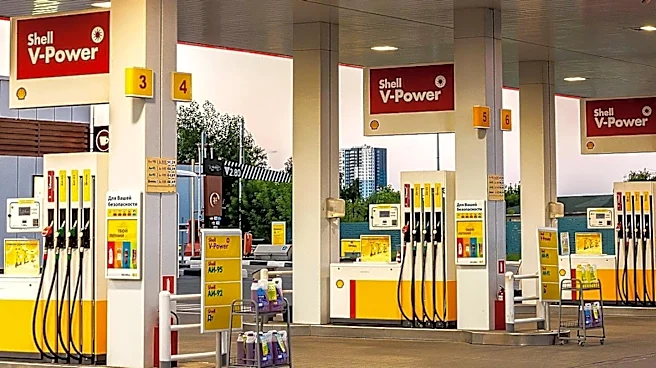
Shell has signed new service orders with Venezuela’s state-owned oil company, Petróleos de Venezuela (PDVSA), for a planned $400 million investment in the Carito-Pirital oil and gas producing area in northern Monagas. The agreements, signed on November
24, 2026, aim to increase oil and natural gas production, enhance operational efficiency, and reduce gas flaring and venting. This development marks a significant return for Shell to Venezuela's oilfields, building on earlier agreements made throughout 2026. The company's involvement in Venezuela dates back over a century, with its predecessors playing a pioneering role in the country's commercial petroleum industry. While the investment seeks to improve environmental performance by reducing wasteful gas flaring, the full commercial details, including Shell's precise financial contribution and anticipated production increases, remain undisclosed. The announcement coincides with the liquidation of Shell's former Australian battery business, Sonnen Australia, highlighting a strategic pivot back towards conventional hydrocarbon production.
Why It's Important?
This $400 million investment by Shell in Venezuela is significant for several reasons. For Shell, it underscores the enduring importance of oil and natural gas to its core strategy, even as it previously explored ventures in renewable energy like household battery technology. The move into Venezuela, a country with a complex political landscape and a history of nationalization and geopolitical risks, signals Shell's willingness to navigate challenging environments for hydrocarbon opportunities. For Venezuela, the investment could provide a much-needed boost to its oil and gas sector, potentially increasing production and improving infrastructure. The stated objective of reducing gas flaring also presents a potential environmental benefit, as flaring contributes to greenhouse gas emissions. However, the broader impact on total emissions, given the planned increase in production, remains a critical question. Major institutional investors in Shell, such as BlackRock and Vanguard, will likely scrutinize the environmental and financial characteristics of these expanding Venezuelan operations, particularly regarding contractual allocations, exposure to geopolitical disruption, environmental liabilities, and the credibility of emissions-reduction commitments.
What's Next?
The immediate next steps involve the implementation of the signed service orders in the Carito-Pirital area. However, several commercially important details, such as Shell's exact share of the investment, the financing structure, anticipated production increases, and the timetable for implementation, are yet to be disclosed. The credibility of Shell's environmental ambitions will depend on whether these can be translated into measurable results, particularly regarding independently verified reductions in methane emissions and flaring. Stakeholders, including investors and environmental researchers, will be looking for the publication of the project's environmental baseline, methane measurements, flare-reduction targets, capital commitments, and implementation timetable. The long-term success of this venture will also hinge on the stability of Venezuela's political and regulatory environment, as geopolitical risks and sanctions policies have historically impacted international energy companies operating in the country.
Beyond the Headlines
The juxtaposition of Shell's $400 million investment in Venezuelan oil and gas with the liquidation of its Australian battery business reveals a deeper tension within the energy industry and corporate strategies. While many companies are publicly committing to renewable energy transitions, the economic realities and demand for hydrocarbons continue to drive significant investments in fossil fuels. This development highlights the complex challenge of balancing environmental ambitions with commercial interests and global energy demands. The emphasis on reducing gas flaring, while positive, also raises questions about whether such measures are genuine steps towards sustainability or primarily a means to improve efficiency and public perception while expanding overall fossil fuel output. The long history of unrealized gas ambitions in Venezuela further underscores the inherent risks and uncertainties associated with large-scale energy projects in politically volatile regions, prompting scrutiny from investors regarding corporate governance and risk management.