






What's Happening?
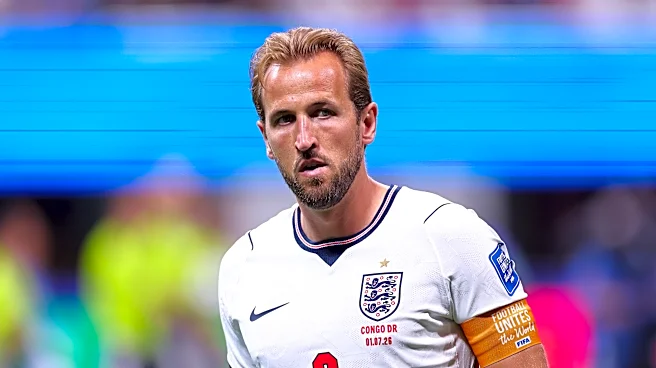
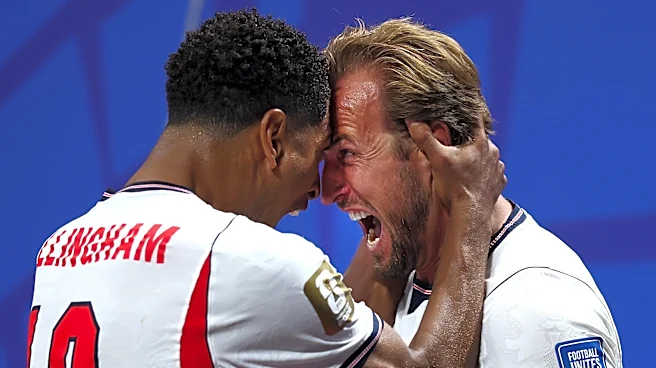
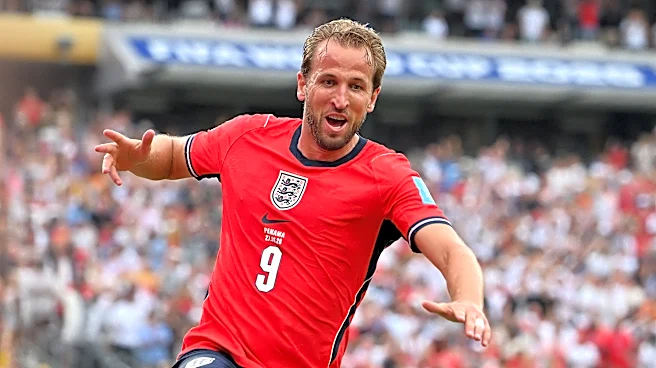
Harry Kane, the captain of England's national soccer team, has emerged as a pivotal figure in the ongoing FIFA World Cup. Kane's performance, particularly his second-half brace, was instrumental in England's comeback against DR Congo, preventing early
elimination. Despite the challenges faced by the team, including a tough match in Atlanta, Kane's ability to thrive under pressure is seen as a key asset. His leadership and scoring prowess have drawn comparisons to legendary players like Pele and Gary Lineker. Kane's international success is partly attributed to his willingness to play outside England, which has helped him adapt to diverse environments.
Why It's Important?
Kane's leadership and performance are crucial for England as they aim to end a 60-year World Cup title drought. His ability to perform in high-pressure situations could inspire the team to overcome historical challenges. The broader significance lies in the potential shift in England's approach to international tournaments, emphasizing adaptability and resilience. Kane's success could also influence future English players to seek opportunities abroad, enhancing their skills and experience. This development is significant for English soccer, potentially altering its international standing and strategy.
What's Next?
England faces a challenging match against Mexico, which will test the team's adaptability and Kane's leadership further. The outcome of this match could determine England's trajectory in the tournament. Success in the World Cup could lead to increased recognition and opportunities for Kane and his teammates. Additionally, it may prompt a reevaluation of England's soccer strategies, encouraging more players to gain international experience. The team's performance could also impact the perception of English soccer globally, potentially attracting more talent and investment.