





What's Happening?
Blue Origin CEO Dave Limp announced in an early November memo that the return to flight for the New Glenn rocket has been delayed to January 2027. This delay follows an explosion during a test in May that damaged Blue Origin's Florida launch pad. Additionally,
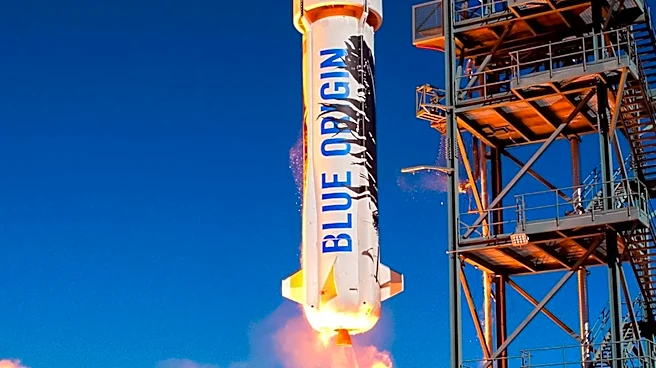
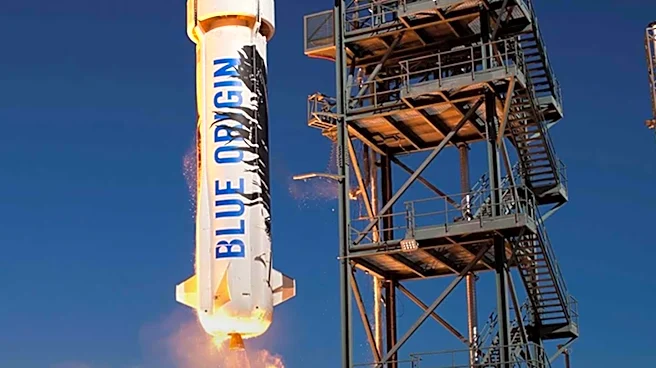
Limp communicated a pause on the New Shepard suborbital tourist flights, effective January 30, stating that the company would redirect resources toward its human lunar capabilities, including New Glenn. This pause means New Shepard tourist flights will not resume until early 2028 at the earliest, leaving customers with multi-year backlogs waiting. The last New Shepard flight, NS-38, occurred in January, carrying six people. This strategic shift prioritizes the development of Blue Origin's lunar programs and the New Glenn heavy-lift launch vehicle, which recently secured a launch services agreement with Google for its Project Suncatcher in 2029.
Why It's Important?
This decision by Blue Origin has significant implications for the commercial space industry and its customers. The delay of New Glenn impacts the timeline for heavy-lift launches, potentially affecting satellite deployment schedules for clients like Google. The indefinite pause of New Shepard tourist flights, which will last at least two years, creates uncertainty for individuals who have purchased tickets for suborbital space tourism. This move also highlights a strategic pivot within Blue Origin, shifting focus from short-duration space tourism to more ambitious lunar and orbital projects. The timing of New Shepard's potential return in early 2028 coincides with the FAA gaining the ability to propose safety rules for people aboard commercial spacecraft, suggesting a potential future regulatory landscape for space tourism. This could set a precedent for how commercial human spaceflight is regulated in the U.S., influencing other players in the nascent industry.
What's Next?
Blue Origin has not yet announced a specific restart date for New Shepard flights, only indicating 'no less than two years' from January 30, 2026, placing the earliest return in early 2028. The company will need to address its customer backlog for New Shepard during this extended pause. The focus will now be on the development and successful launch of New Glenn, with its return to flight targeted for January 2027 and the Google Project Suncatcher mission scheduled for the first quarter of 2029. The FAA's ability to propose safety rules for commercial spacecraft passengers starting January 1, 2028, will be a critical factor for the future of New Shepard and the broader space tourism sector. Congress could also extend the current 'learning period' for these regulations, further influencing the industry's trajectory.
Beyond the Headlines
The strategic shift by Blue Origin from suborbital tourism to lunar and heavy-lift capabilities reflects a broader trend in the space industry towards more complex and potentially more lucrative endeavors. While space tourism has captured public imagination, the technical and regulatory challenges, coupled with the high costs, may be prompting companies to re-evaluate their priorities. This pivot could signal a maturation of the commercial space sector, moving beyond novelty experiences to focus on infrastructure and scientific missions. The extended pause on New Shepard also raises questions about the long-term viability and market demand for suborbital tourism, especially as regulatory oversight is set to increase. This could lead to a consolidation of efforts in the space industry, with companies specializing in different segments of space exploration and utilization.