
What's Happening?
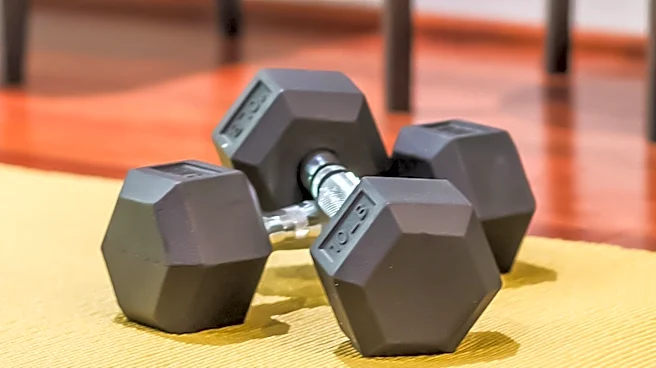
Dumbbells provide a versatile and practical solution for strength training at home, enabling individuals to perform a wide range of exercises for the upper body, lower body, and core without needing a fully
equipped gym. A structured program utilizing dumbbells can support various movement patterns, including bilateral and unilateral exercises. Key benefits include versatility, convenience for home use, progressive training capabilities, and the ability to perform unilateral work. A strength training coach can help tailor exercise selection based on an individual's mobility, experience, available space, and training goals, ensuring a structured routine that gradually increases the training challenge. Progression strategies involve increasing resistance, repetitions, sets, improving range of motion, enhancing movement control, using more challenging exercise variations, and managing rest periods.
Why It's Important?
The accessibility and versatility of dumbbell-only strength training are significant for promoting physical activity and health across the U.S., especially for those who may not have access to a gym or prefer home workouts. This approach democratizes strength training, making it feasible for a broader demographic to engage in regular physical activity, which is crucial for combating sedentary lifestyles and associated health issues. By focusing on structured progression and proper technique, individuals can achieve meaningful strength gains and improve overall fitness, contributing to better public health outcomes. The emphasis on coaching, even online, highlights the importance of personalized guidance to prevent injuries and maximize effectiveness, ensuring that home workouts are not just convenient but also safe and productive.
What's Next?
Individuals looking to incorporate dumbbell training are advised to seek guidance from a strength training coach to develop a structured program. This includes personalized exercise selection, progressive programming, and technique guidance, potentially through video-based feedback. The article suggests that progression does not require increasing every variable simultaneously, and a coach can help determine when and how to advance. For those with injuries or medical conditions, clearance from a healthcare professional is recommended before starting new routines. The continued growth of online coaching services is likely to support this trend, making expert guidance more accessible to home exercisers.
Beyond the Headlines
The rise of effective home-based strength training, particularly with minimal equipment like dumbbells, signifies a broader shift in fitness culture towards convenience and personalization. This trend challenges the traditional gym model, empowering individuals to take more control over their fitness journeys. It also raises questions about the role of technology in delivering personalized coaching and the potential for AI-driven fitness programs. Furthermore, the focus on fundamental movement patterns and progressive overload, rather than complex routines, underscores a return to basics in strength training, emphasizing consistency and proper form over novelty. This could lead to a more sustainable and inclusive fitness landscape, where effective training is not limited by location or extensive equipment requirements.