


What's Happening?
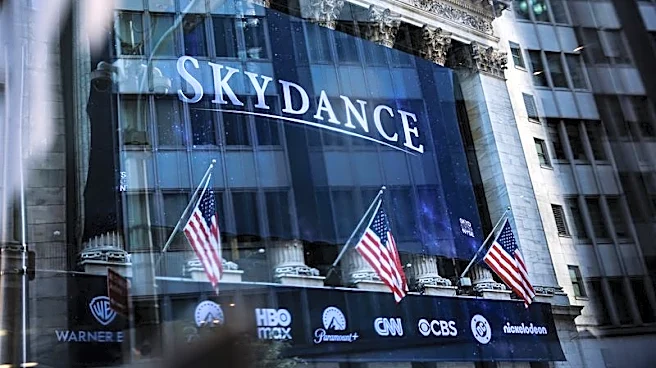
All Elite Wrestling's (AEW) long-term future is not guaranteed following the Paramount-Skydance merger, despite AEW President Tony Khan's public optimism. Dave Meltzer, during the November 9, 2026, edition of Wrestling Observer Radio, clarified that AEW falls
under the entertainment division, not the sports division, of the new corporate structure. This distinction is crucial because decisions regarding AEW's programming will be made by entertainment executives who are targeting approximately $6 billion in cost reductions. Meltzer emphasized that a show does not necessarily need to be losing money to be cut if it is deemed non-essential to the new company's plans. AEW's current media agreement is in place through at least 2027, with options extending into 2028, and its shows continue to air on TBS, TNT, and HBO Max.
Why It's Important?
This situation is significant for the professional wrestling industry and media landscape. The potential for AEW's programming to be re-evaluated or even cut by the new ownership highlights the precarious nature of media deals, even for established brands. For AEW, it introduces uncertainty regarding its broadcast future beyond its current contract, potentially impacting its financial stability, talent retention, and overall growth trajectory. For fans, it raises questions about the continued availability of AEW content on its current platforms. The broader media industry will observe how the Paramount-Skydance merger handles its acquired assets, setting a precedent for how large-scale corporate consolidations can affect niche entertainment properties, especially when significant cost-cutting measures are in play.
What's Next?
While AEW's current media deal provides a degree of stability until at least 2027, the period leading up to its renewal or renegotiation will be critical. Entertainment executives at the merged Paramount-Skydance entity will likely assess AEW's performance, viewership, and strategic value within their portfolio. The expected combined subscription package of Paramount+ and HBO Max in early 2027, followed by a unified streaming service, could also influence decisions regarding content distribution. AEW will need to demonstrate its continued relevance and financial viability to secure its position. Tony Khan's ongoing efforts to promote AEW's value and appeal to the new ownership will be crucial in navigating these corporate changes.
Beyond the Headlines
The situation with AEW under the Paramount-Skydance merger reflects a larger trend in the entertainment industry where corporate consolidation and the pursuit of cost efficiencies often lead to re-evaluations of content portfolios. This can have profound effects on creative industries, as decisions are increasingly driven by financial metrics and strategic alignment rather than solely artistic merit or established fan bases. For professional wrestling, it underscores the challenge of maintaining independence and creative control within larger corporate structures. It also highlights the evolving role of streaming services and the potential for content to be shifted or discontinued as media companies restructure their offerings, impacting both creators and consumers in the long term.