


What's Happening?
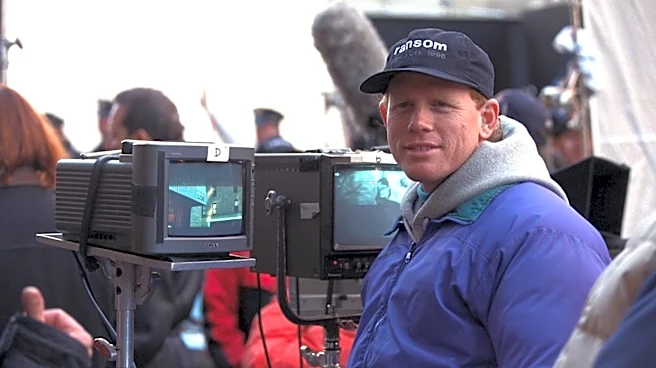
In 1992, acclaimed director Ron Howard and his family were placed under FBI protection due to a series of alarming incidents, including phone tapping, kidnapping threats against his children, and suspicious vehicles near their residence. His daughter,
Bryce Dallas Howard, recounted the stressful period, noting the presence of FBI agents with firearms and hushed conversations among her parents. This personal experience of fear for his family's safety deeply impacted Howard. Three years later, this trauma and anxiety found an outlet in his directorial work, specifically in the 1996 film 'Ransom.' The movie, starring Mel Gibson, depicts a desperate father taking extreme measures to retrieve his kidnapped son, a narrative that closely mirrored Howard's own anxieties and quest to understand the mindset of kidnappers.
Why It's Important?
This revelation highlights how deeply personal experiences can shape artistic endeavors, even for a director known for a generally inoffensive and solid filmography. Howard's decision to channel his real-life fear and anxiety into 'Ransom' demonstrates the cathartic power of art and storytelling. The film, a commercial success, allowed him to explore complex emotions and scenarios related to family protection and the psychological toll of threats. For audiences, understanding the personal genesis of such a film can add a layer of depth and authenticity to its themes, making the on-screen drama resonate more profoundly. It also underscores the often-unseen pressures and dangers that public figures, even those perceived as 'inoffensive,' can face, requiring federal intervention for their safety.
Beyond the Headlines
The incident involving Ron Howard and his family, requiring FBI protection, sheds light on the vulnerabilities faced by high-profile individuals, even outside of direct political or controversial contexts. The fact that a director known for mainstream, generally feel-good films experienced such a terrifying ordeal challenges public perceptions of celebrity life. It also raises questions about the psychological impact of such threats on individuals and their families, and how they process and cope with these experiences. Howard's choice to address this trauma through his work, rather than shying away from it, offers a unique perspective on the intersection of personal life and professional output in the entertainment industry, demonstrating how art can be a powerful tool for processing and communicating profound personal experiences.