



What's Happening?
A certified kettlebell specialist, Faith Ellis, founder of The KettleBelle, advocates for kettlebells as a superior tool for building a strong, functional core. Unlike dumbbells, the asymmetrical and dynamic nature of kettlebells displaces their center
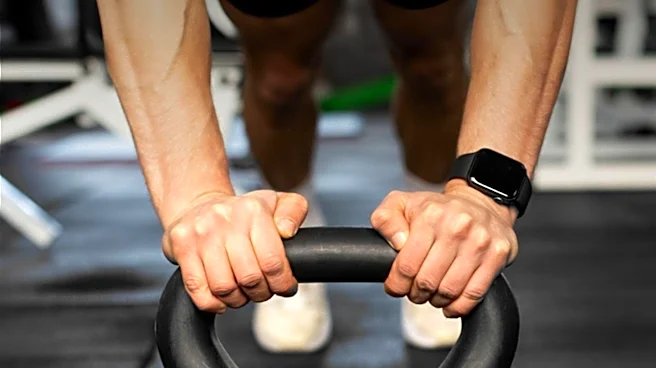
of mass from the handle, forcing deep stabilizing muscles like the transverse abdominis and obliques to constantly engage for balance. Ellis emphasizes that every kettlebell movement inherently involves active core engagement. She recommends three specific exercises for a powerful core workout: the plank kettlebell drag, the kettlebell halo, and the kettlebell snatch. These exercises are designed to challenge strength and stability, moving beyond traditional core exercises like crunches to build foundational total-body stability and spinal protection.
Why It's Important?
The emphasis on kettlebell training for core strength highlights a shift towards functional fitness, which is crucial for overall physical health and injury prevention. A strong core, as promoted by kettlebell exercises, is fundamental for supporting the spine, improving posture, and enhancing performance in daily activities and other forms of exercise. For individuals in the U.S., where sedentary lifestyles are prevalent, incorporating dynamic and stabilizing exercises can counteract the negative effects of prolonged sitting and reduce the risk of back pain and other musculoskeletal issues. The focus on proper form, as stressed by Ellis, is also vital to ensure that individuals maximize the benefits of these exercises while minimizing the risk of injury, contributing to a more effective and sustainable fitness regimen.
What's Next?
Individuals interested in improving their core strength and stability can explore incorporating the recommended kettlebell exercises into their fitness routines. Faith Ellis's recommendations, including the plank kettlebell drag, kettlebell halo, and kettlebell snatch, provide a structured approach to kettlebell training. Access to certified kettlebell specialists or online resources, such as The KettleBelle app, can offer guidance on proper form and technique. As the popularity of functional fitness continues to grow, more gyms and trainers may offer specialized kettlebell classes or programs, making these effective core-strengthening methods more accessible to a wider audience.
Beyond the Headlines
The advocacy for kettlebells by specialists like Faith Ellis underscores a broader trend in fitness towards tools and methods that promote holistic body engagement rather than isolated muscle work. This approach aligns with principles of biomechanics and functional movement, which are increasingly recognized for their long-term health benefits. The inherent challenge of kettlebells, requiring constant stabilization, not only builds physical strength but also enhances proprioception and neuromuscular control. This can lead to improved athletic performance, better balance, and a reduced risk of falls, particularly as individuals age. The shift away from purely aesthetic fitness goals towards functional strength reflects a more sustainable and health-oriented perspective on physical well-being.