






What's Happening?
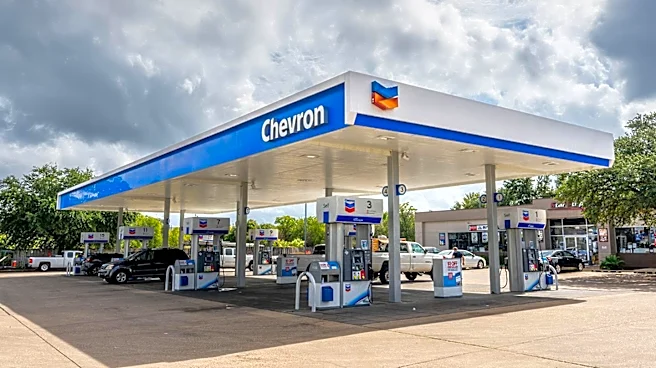
Chevron has reportedly opted out of funding the remaining parts of the feasibility study for Guyana's proposed deep-water port. This decision follows Chevron's US$53 billion acquisition of Hess Corporation in 2025, which secured Chevron a 30% interest
in Guyana's Stabroek Block. Initially, Hess had financed the preliminary engineering and design for the port project. However, after the acquisition, Chevron indicated it would reconsider its support for the pre-planning studies. Despite Chevron's withdrawal of funding for the feasibility study, Guyana's President Irfaan Ali stated that the study will proceed and is expected to be completed by December. The government is working with Bechtel and engaging potential international financiers and investors, including the U.S. Export-Import Bank, the United Kingdom, and the Qatar Investment Authority, to ensure the project moves forward.
Why It's Important?
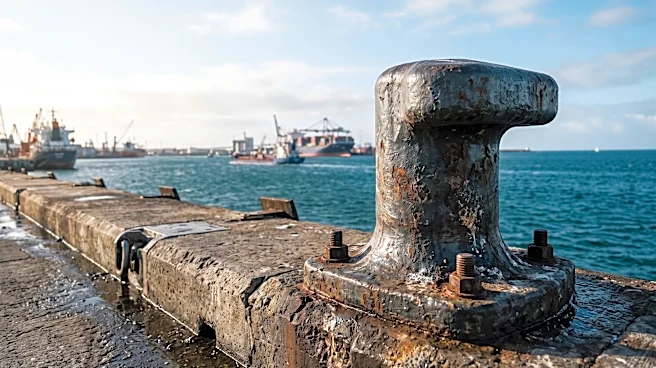
Chevron's decision to withdraw funding for the deep-water port feasibility study is significant for Guyana's infrastructure development and its burgeoning oil and gas sector. A deep-water port is considered critical for building out Guyana's economy, facilitating diversification, and enhancing competitiveness, especially given the rapid expansion of its offshore oil production. While Chevron's focus may be shifting towards integrating Hess's assets, particularly the Stabroek Block, the port project remains a high priority for the Guyanese government. The involvement of international partners like the U.S. Export-Import Bank, the UK, and Qatar highlights the strategic importance of this port for regional trade and energy logistics. The project's continuation without Chevron's direct financial support for the study underscores Guyana's determination to develop its infrastructure independently and attract a broader range of international investment.
What's Next?
The feasibility study for Guyana's deep-water port is expected to be completed by December, as confirmed by President Irfaan Ali. Following this, a meeting with potential investors, particularly large international entities, is planned to move the project forward into full design and implementation. The Guyanese government will continue to aggressively seek and secure funding from various international sources, including the U.S. Exim Bank, the UK, and the Qatar Investment Authority. The completion of the feasibility study will provide the necessary groundwork to attract and finalize investment, paving the way for the construction of the port. This development is crucial for supporting the country's economic growth and its role as an emerging energy hub in the region.
Beyond the Headlines
Chevron's decision, while seemingly a corporate financial adjustment post-acquisition, subtly highlights the complex interplay between corporate strategy, national development, and international finance in the energy sector. It underscores that even with significant foreign investment in resource extraction, host nations often bear the primary responsibility for developing supporting infrastructure. This situation could serve as a precedent for other resource-rich developing countries, emphasizing the need for diversified funding sources and robust national development plans. Furthermore, the continued pursuit of the deep-water port by Guyana, with support from multiple international entities, reflects a broader geopolitical interest in the region's stability and economic potential, particularly in the context of global energy supply chains and trade routes. The project's success will not only transform Guyana's economy but also influence regional logistics and trade dynamics.