




What's Happening?
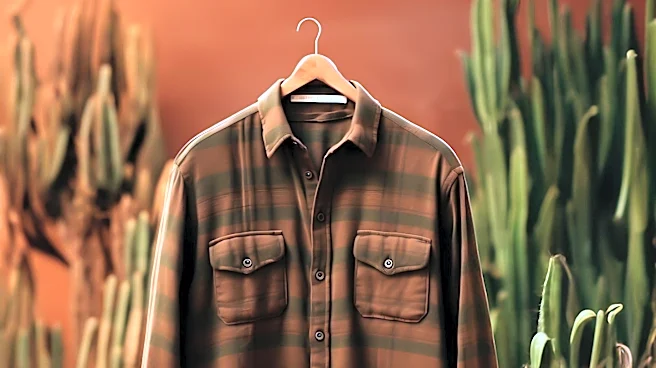
Huckberry's in-house brand, Flint and Tinder, has released a new Washed Herringbone Workshirt, designed to be a versatile and all-purpose garment. The shirt is crafted from 100-percent cotton with a herringbone weave, a fabric choice typically associated
with more refined attire like suits and blazers. It features design elements such as a pointed collar, pleated cuffs, gusseted side seams, and a curved hem, which align with traditional dress shirt conventions. However, its dual chest pockets, midweight fabric, and classic fit give it a relaxed and unpretentious appearance. The shirt is available in three colors: brown, olive, and blue, and is marketed as suitable for various occasions, from casual wear with jeans to layering under a jacket.
Why It's Important?
The launch of the Washed Herringbone Workshirt by Flint and Tinder reflects a growing consumer demand for durable, functional, and stylish apparel that bridges the gap between casual and semi-formal wear. This trend is significant for the U.S. apparel market as it indicates a shift towards timeless, high-quality pieces that offer versatility and longevity, moving away from fast fashion. For retailers and brands, understanding this demand for 'heritage' workwear, which emphasizes craftsmanship and classic design, can inform product development and marketing strategies. The shirt's blend of ruggedness and refinement caters to a demographic that values both practicality and aesthetic appeal, influencing design trends in men's fashion. The emphasis on 100-percent cotton also speaks to a preference for natural fibers, which can impact sourcing and manufacturing decisions within the industry.
What's Next?
The success of products like the Washed Herringbone Workshirt could encourage other U.S. apparel brands to invest further in designs that blend traditional workwear aesthetics with modern versatility. This might lead to an increased focus on durable materials, classic silhouettes, and multi-functional garments across the industry. Consumers can expect to see more offerings that prioritize quality and timeless style over fleeting trends. Retailers will likely continue to highlight the 'story' behind such garments, emphasizing their historical roots and functional benefits. This trend could also influence manufacturing practices, potentially encouraging a return to more traditional textile techniques or a greater emphasis on sustainable sourcing of natural fibers. The market will likely continue to see a blend of casual and refined elements in everyday apparel, catering to a desire for clothing that performs well in diverse settings.
Beyond the Headlines
The enduring appeal of twentieth-century American workwear, as exemplified by the Flint and Tinder workshirt, points to a deeper cultural appreciation for authenticity, durability, and craftsmanship in an increasingly disposable consumer landscape. This trend is not merely about fashion but reflects a broader societal value placed on products that are built to last and possess a sense of history. The choice of herringbone, a weave with a rich sartorial past, elevates a utilitarian garment, suggesting a desire for understated elegance in everyday attire. This movement away from purely synthetic, performance-driven fabrics in casual wear, as noted in the source, indicates a re-evaluation of comfort and aesthetic pleasure in clothing. It also highlights the influence of 'heritage' brands and their ability to tap into nostalgia while meeting contemporary needs, shaping consumer expectations for quality and design in the U.S. apparel market.