








What's Happening?
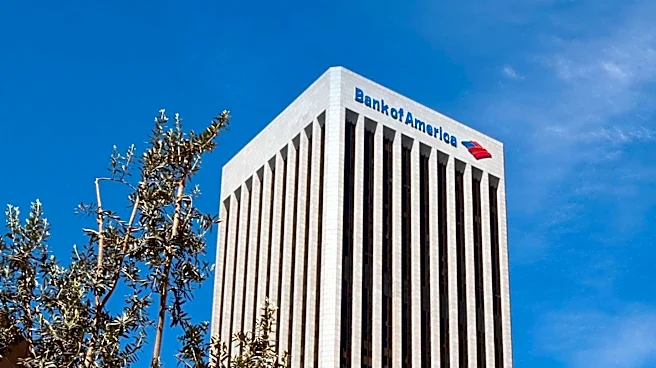
Bank of America (NYSE:BAC) is currently under increased scrutiny due to elevated long-end Treasury yields and a secular-growth economic environment. The institution's comprehensive banking model, which encompasses households, businesses, markets, payments,
and wealth management, positions it uniquely to navigate various economic trends. This broad exposure means that the bank's performance is influenced by multiple factors simultaneously, including deposit strength, lending margins, consumer activity, commercial demand, trading volumes, credit quality, and digital efficiency. Geopolitical uncertainties are also playing a role, impacting broader equity sentiment, but Bank of America's consumer-focused franchise remains a key indicator for how financial companies might fare in an environment of persistent yields. The interplay between these forces, rather than any single headline, is shaping the ongoing narrative for the bank.
Why It's Important?
The performance of major financial institutions like Bank of America is crucial for the U.S. economy, as their health reflects and influences broader economic conditions. Elevated Treasury yields directly impact banking economics by affecting the pricing of loans, mortgages, and other interest-sensitive assets. While higher yields can support revenue from new lending, banks must also manage the cost of funding these assets, especially as deposit competition intensifies. A stable deposit base is vital for funding, and strong economic activity can bolster lending and payment volumes. The bank's diversified operations, including markets and wealth management, offer resilience against shifts in specific sectors. Understanding these dynamics is essential for investors, policymakers, and the public, as they provide insights into the stability of the financial system and the potential trajectory of economic growth and inflation.
What's Next?
The future trajectory for Bank of America and the broader banking sector will largely depend on the direction of long-term Treasury yields, the intensity of deposit competition, and the demand for credit. Consumer activity and the Federal Reserve's ongoing assessment of inflation and economic growth will also be critical factors. Geopolitical developments, particularly their impact on energy prices and global uncertainty, will continue to influence inflation expectations and financial market activity. For Bank of America, the interaction of these diverse forces will determine its financial performance. The bank will need to maintain a stable deposit franchise to support funding, while stronger economic activity could reinforce lending and payment volumes. Its diversified operations are expected to provide additional stability if conditions in other areas shift.
Beyond the Headlines
The current focus on Bank of America highlights a deeper trend in the financial industry: the increasing complexity of managing a large, diversified banking institution in a volatile global economy. The interplay between macroeconomic factors like Treasury yields and microeconomic elements such as consumer behavior and digital efficiency underscores the intricate challenges faced by banks. This situation also brings to light the ethical considerations around balancing profitability with responsible lending and deposit management, especially when interest rates are in flux. The emphasis on digital efficiency points to the ongoing technological transformation within banking, which aims to enhance customer convenience and manage operating costs, but also raises questions about data security and the future of traditional banking services. The bank's ability to adapt to these multifaceted pressures will set a precedent for how other large financial institutions navigate similar environments.