






What's Happening?
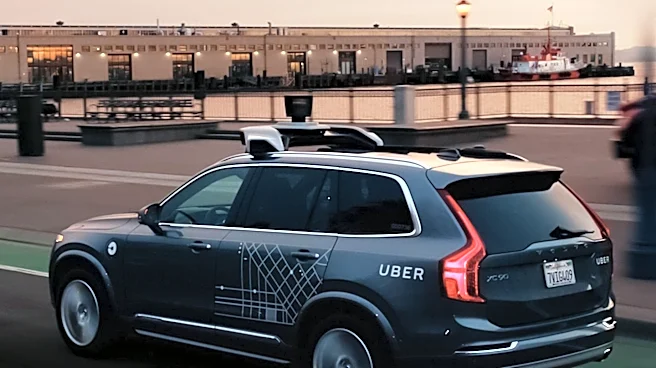
Uber is piloting a new feature called 'Recorded Rides' in several U.S. cities, including Baltimore, Raleigh, Indianapolis, and St. Louis. This option allows riders to book trips with drivers who have activated Uber's 'Record My Ride' feature, which uses
the driver's phone's front camera to film the entire journey. The video footage is encrypted and stored exclusively on the driver's phone, with automatic deletion after 14 days unless it is submitted as part of a safety report or insurance claim. Uber states that it can share these recordings with law enforcement under legal process or in emergency situations. The pilot program is specifically aimed at enhancing safety for late-night trips and rides booked for teenagers. Uber is also testing automatic recording activation when a vehicle deviates from its route or when the app detects a potential crash.
Why It's Important?
This initiative by Uber represents a significant step in addressing safety concerns for both riders and drivers within the ride-sharing industry. The ability to record entire trips provides a verifiable record of events, which can be crucial in resolving disputes, investigating incidents, and deterring misconduct. For drivers, who face risks on the job, this feature offers an additional layer of protection, as evidenced by a 2022 study that found 22 Uber drivers among over 50 U.S. gig workers killed over five years. For riders, particularly vulnerable groups like teenagers or those traveling late at night, the option of a recorded ride can offer increased peace of mind. The pilot's success could lead to broader implementation, potentially setting a new standard for safety features across the ride-sharing and gig economy sectors.
What's Next?
Following the initial pilot in these U.S. cities, Uber will likely evaluate the effectiveness and user adoption of the 'Recorded Rides' feature. If successful, the company may expand the program to more cities and potentially integrate it as a standard safety option. Further developments could include refining the technology for better video quality, exploring additional triggers for automatic recording, and enhancing the process for submitting and reviewing footage. There may also be ongoing discussions with privacy advocates and regulatory bodies regarding data storage, access, and the balance between safety and individual privacy. The feature's reception by both drivers and riders will be critical in determining its long-term viability and widespread adoption within the Uber platform and potentially influencing competitors to introduce similar safety measures.
Beyond the Headlines
The introduction of 'Recorded Rides' by Uber raises profound questions about privacy in public and semi-public spaces, and the increasing surveillance capabilities embedded in everyday services. While framed as a safety measure, the continuous recording of interactions within a vehicle could lead to debates about consent, data ownership, and the potential for misuse of footage. This development also highlights the evolving nature of trust and accountability in the gig economy, where technology is increasingly used to mediate interactions and enforce standards. The ethical implications extend to how such data might be used beyond immediate safety concerns, such as for training AI, marketing, or even in legal contexts unrelated to the ride itself. The balance between enhancing safety through technology and protecting individual liberties will be a continuous challenge as these features become more prevalent.