

What's Happening?
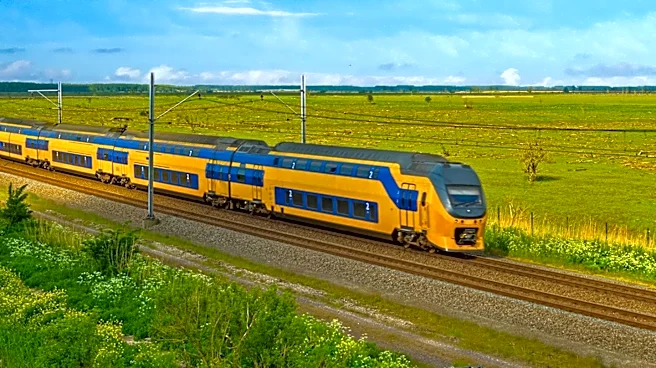
The Dutch national railway company, NS, has decided to continue its partnership with the Spanish train manufacturer CAF, despite facing significant political and moral pressure. CAF has been criticized for its involvement in constructing a light-rail
line that connects West Jerusalem with settlements in the West Bank, which are considered illegal under international law. NS stated that European procurement laws do not allow for the exclusion of companies based on moral grounds unless there is a statutory legal basis. The partnership includes a major order for 60 trains, part of a €600 million contract, which will enhance the Dutch rail network's capacity. The decision comes after closed-door discussions with CAF, despite previous issues with delivery delays and operational complaints.
Why It's Important?
This decision by NS highlights the complexities of international business ethics and the limitations of legal frameworks in addressing moral concerns. The continuation of the partnership with CAF underscores the challenges faced by public entities in balancing legal obligations with ethical considerations. The decision also has significant implications for the Dutch rail network, as the new trains are expected to increase passenger capacity and improve service. However, it may also lead to public and political backlash, given the controversial nature of CAF's involvement in the West Bank. This situation reflects broader geopolitical tensions and the difficulties in navigating them within the context of international business agreements.
What's Next?
NS's decision may prompt further scrutiny and debate within the Netherlands and the European Union regarding procurement laws and ethical business practices. There could be increased pressure on NS and other public entities to find ways to incorporate ethical considerations into their procurement processes. Additionally, the delivery and implementation of the new trains will be closely watched, particularly in light of CAF's past performance issues. The situation may also influence future contracts and partnerships, as companies and governments grapple with the intersection of business, ethics, and international politics.