
What's Happening?
State Agriculture Minister Shyam Singh Rana highlighted the role of Artificial Intelligence (AI) in the future of smart farming during the closing ceremony of the 8th Mango Fair at the Indo-Israel Centre
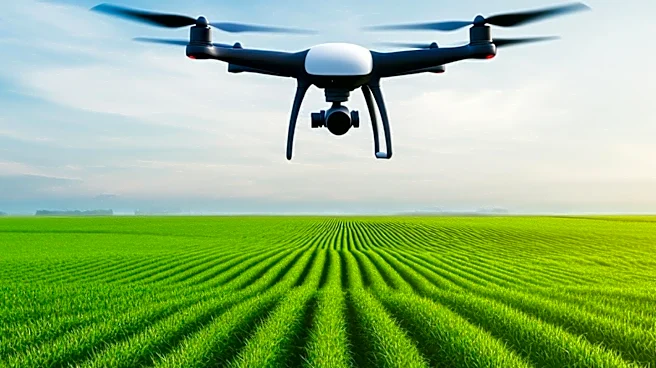
of Excellence of Sub-Tropical Fruit in Ladwa. Rana emphasized that while AI can significantly enhance agricultural practices by providing insights into soil health, irrigation, and market demands, the traditional experience of farmers remains crucial. He noted that AI technologies, such as drones for farm surveys and digital accounting for financial management, are becoming integral to modern agriculture. However, he stressed that the essence of farming lies in the farmers' experience, which should work in tandem with technological advancements. The minister also mentioned government initiatives to promote horticultural crops and natural farming in response to shrinking landholdings.
Why It's Important?
The integration of AI in agriculture represents a significant shift towards more efficient and data-driven farming practices. This development is crucial for enhancing productivity and sustainability in the agricultural sector, which is a backbone of the Indian economy. By leveraging AI, farmers can optimize resource use, reduce costs, and increase yields, potentially leading to higher incomes and improved livelihoods. However, the emphasis on maintaining traditional farming knowledge ensures that technological advancements do not overshadow the invaluable insights gained from years of farming experience. This balanced approach could serve as a model for other regions facing similar challenges in modernizing agriculture while preserving cultural practices.
What's Next?
As AI continues to be integrated into farming, the government is likely to increase support for training programs that help farmers adapt to new technologies. This may include workshops and resources to educate farmers on using AI tools effectively. Additionally, the promotion of horticultural crops and natural farming could lead to policy changes and incentives aimed at encouraging sustainable agricultural practices. Stakeholders, including agricultural organizations and technology providers, may collaborate to develop AI solutions tailored to the specific needs of farmers, ensuring that the technology is accessible and beneficial to all.