





What's Happening?
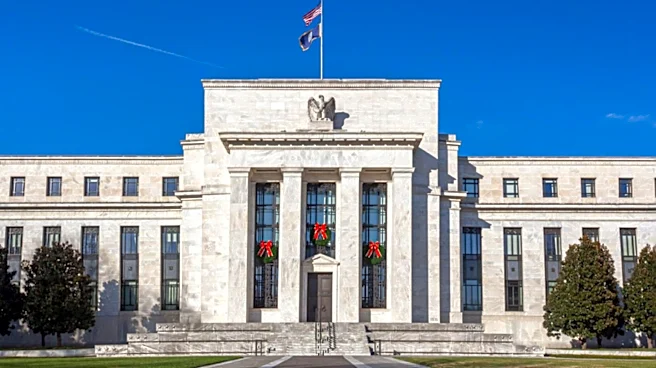
Federal Reserve Chair Kevin Warsh has decided to discontinue the practice of providing forward guidance on interest rates, a strategy previously employed by his predecessor, Jerome Powell. Forward guidance involved signaling to markets the likely direction
of interest rates in future Federal Open Market Committee (FOMC) meetings. Warsh believes that this practice interferes with market efficiency and may compel the Fed to adhere to outdated guidance despite new economic data. His approach has raised concerns among investors and market analysts, as the absence of forward guidance could lead to increased market volatility and uncertainty.
Why It's Important?
The decision by Kevin Warsh to eliminate forward guidance is significant as it introduces a new level of uncertainty into financial markets. Historically, forward guidance has helped stabilize markets by providing a clearer picture of the Federal Reserve's monetary policy intentions. Without it, markets may experience heightened volatility, as investors will have to rely solely on economic data without any interpretative cues from the Fed. This could lead to more dramatic market reactions to FOMC meetings and economic reports, potentially affecting investment strategies and economic stability.
What's Next?
As markets adjust to this new approach, investors and analysts will likely pay closer attention to economic indicators and Fed communications for clues about future policy moves. The absence of forward guidance may prompt financial institutions to develop new models for predicting interest rate changes. Additionally, the Fed's decision-making process may come under increased scrutiny, as stakeholders seek to understand the rationale behind interest rate decisions in the absence of prior signals.