



What's Happening?
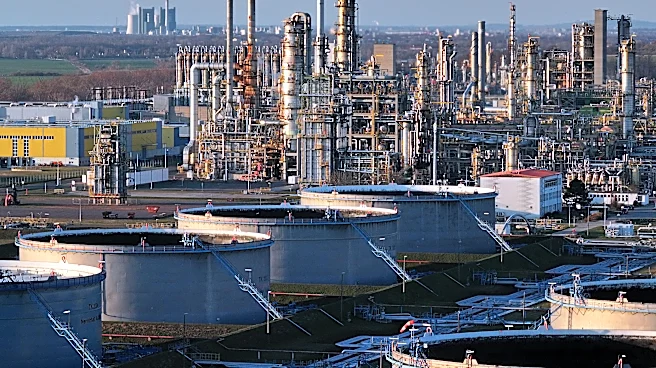
OPEC+ has announced an increase in oil output targets starting in August, following a virtual meeting of its members. This decision comes as the Strait of Hormuz, a critical chokepoint for global oil shipments, begins to reopen for exports. The group,
which includes OPEC members and allied producers like Russia, agreed to raise production quotas by 188,000 barrels per day. This increase is part of a series of adjustments made since April, totaling nearly 800,000 barrels per day. The move aims to stabilize the oil market amid falling prices, which have been influenced by the resumption of oil tanker traffic through the Strait of Hormuz.
Why It's Important?
The decision by OPEC+ to increase oil production is significant for global energy markets, particularly as it comes at a time when oil prices are declining. The reopening of the Strait of Hormuz is crucial, as it is a major route for oil exports from the Middle East. By increasing output, OPEC+ is attempting to balance supply and demand, which could help stabilize prices. This action may impact U.S. energy markets by potentially lowering fuel costs and influencing domestic oil production strategies. Additionally, it reflects the ongoing geopolitical dynamics in the region, as countries navigate the complexities of oil supply and market stability.
What's Next?
As OPEC+ implements its increased production targets, the global oil market will closely monitor the impact on prices and supply chains. The U.S. and other oil-importing nations may adjust their energy policies in response to these changes. Furthermore, the reopening of the Strait of Hormuz will be watched for any potential disruptions that could affect oil shipments. Stakeholders, including energy companies and policymakers, will likely assess the implications for future production and investment decisions. The effectiveness of OPEC+'s strategy in stabilizing the market will be evaluated in the coming months.