







What's Happening?
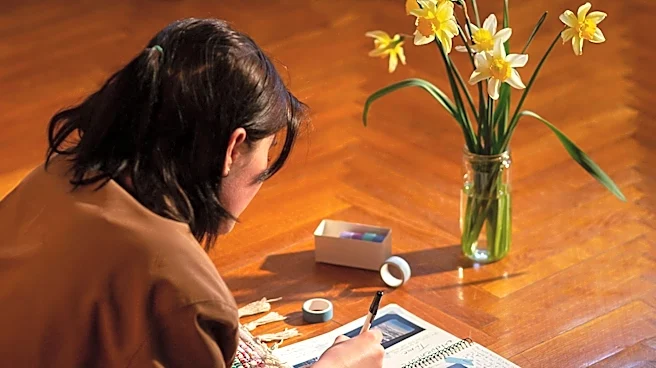
Junk journaling is emerging as a popular creative activity that transforms everyday odds and ends into personalized, handmade notebooks. This practice involves collecting various paper scraps, photographs, ticket stubs, packaging, and other small keepsakes,
and then incorporating them into a journal. Unlike traditional scrapbooking, junk journaling does not require adherence to a strict timeline or theme, allowing for a more free-form and eclectic approach. Participants can glue in items, create collages, or write notes, making each page a unique reflection of memories, textures, and colors. The appeal lies in its accessibility, as it encourages the use of materials already on hand, eliminating the need for expensive supplies or artistic expertise.
Why It's Important?
The rise of junk journaling highlights a growing desire for tangible, creative expression in an increasingly digital world. This practice offers a unique way to preserve personal memories and experiences, moving beyond digital photos and social media posts to create a physical artifact. It promotes mindfulness and creativity, providing a therapeutic outlet for individuals to engage with their personal history and aesthetic preferences. Furthermore, by repurposing everyday items, junk journaling aligns with principles of sustainability and resourcefulness, encouraging individuals to find value in what might otherwise be discarded. This creative endeavor can foster a sense of accomplishment and provide a personal sanctuary for reflection and artistic exploration.
What's Next?
Individuals interested in junk journaling can start by gathering existing materials from their homes, such as old greeting cards, magazine clippings, or unused notebooks. Basic supplies like scissors, glue, and a pen are sufficient to begin. The practice encourages a flexible approach, allowing participants to work on pages whenever inspiration strikes, rather than adhering to a rigid schedule. As the journal grows, it will naturally become thicker, so choosing a sturdy notebook or creating one from loose paper with binder rings is advisable. The ongoing nature of collecting and incorporating new items means that a junk journal can continuously evolve, reflecting an individual's journey and experiences over time.
Beyond the Headlines
Junk journaling taps into a deeper human need for storytelling and legacy-building. In an era where personal narratives are often fragmented across various digital platforms, a junk journal offers a cohesive, tactile representation of one's life. It challenges the notion of perfection often associated with creative pursuits, emphasizing authenticity and the beauty of imperfection. This practice can also serve as a form of 'memory keeping' that is less about chronological order and more about emotional resonance, allowing for a more intuitive and personal connection to past experiences. The act of physically manipulating materials and creating something unique can be profoundly grounding, offering a respite from the abstract nature of digital interactions and fostering a deeper appreciation for the small, often overlooked, details of daily life.