




What's Happening?
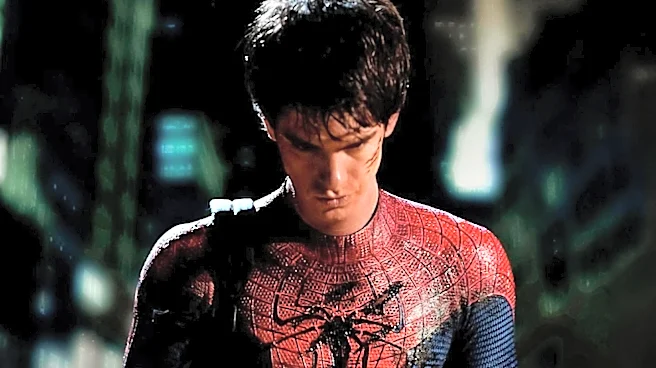
Actor Andrew Garfield recently shared a 'morbid' perspective on his lasting connection to the Spider-Man character. Despite his diverse acting career, including Oscar-nominated performances, Garfield believes his obituary will likely begin with 'Erstwhile
Spider-Man.' He portrayed Peter Parker in 'The Amazing Spider-Man' (2012), its 2014 sequel, and reprised the role in 'Spider-Man: No Way Home' (2021). Garfield acknowledges the character's universal popularity and the deep connection audiences have with Spider-Man, understanding that this role will likely define a significant part of his public identity. He noted that even after playing other significant roles, questions about his potential return to the Marvel universe persist.
Why It's Important?
This reflection by Andrew Garfield highlights the powerful and often indelible impact of iconic superhero roles on an actor's career and public perception. For actors in major franchises, particularly those with a global fanbase like Spider-Man, the role can overshadow other professional achievements, creating a lasting association that transcends individual projects. This phenomenon can be a double-edged sword: while it brings immense recognition and career opportunities, it can also limit an actor's ability to be seen beyond that specific character. For the entertainment industry, it underscores the enduring cultural significance of superhero narratives and how these roles become deeply embedded in the public consciousness, influencing how actors are remembered and perceived for decades.
What's Next?
While Garfield has expressed a focus on making work that genuinely matters to him rather than chasing external validation, the public's fascination with his Spider-Man portrayal is likely to continue. Future projects he undertakes will inevitably be viewed through the lens of his past as Peter Parker, and questions about his potential return to the Marvel Cinematic Universe will probably persist. For the broader entertainment landscape, this trend suggests that actors taking on beloved superhero roles will continue to grapple with the long-term implications for their careers and public identity, potentially leading to more actors carefully considering such commitments or actively working to diversify their portfolios to avoid typecasting.
Beyond the Headlines
Garfield's comments touch upon a broader cultural phenomenon where certain fictional characters achieve such iconic status that they become almost synonymous with the actors who portray them. This goes beyond mere recognition; it speaks to the collective memory and emotional investment audiences have in these characters. The 'morbid' joke about his obituary reflects a deeper understanding of how public figures are immortalized, not just by their full body of work, but often by a single, universally recognized role. This dynamic raises questions about artistic legacy, the nature of fame in the digital age, and the challenge for actors to carve out an identity independent of their most famous portrayals, especially in an era dominated by franchise filmmaking.