






What's Happening?
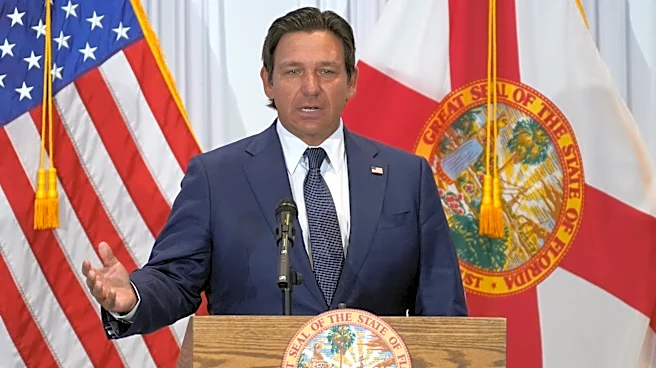
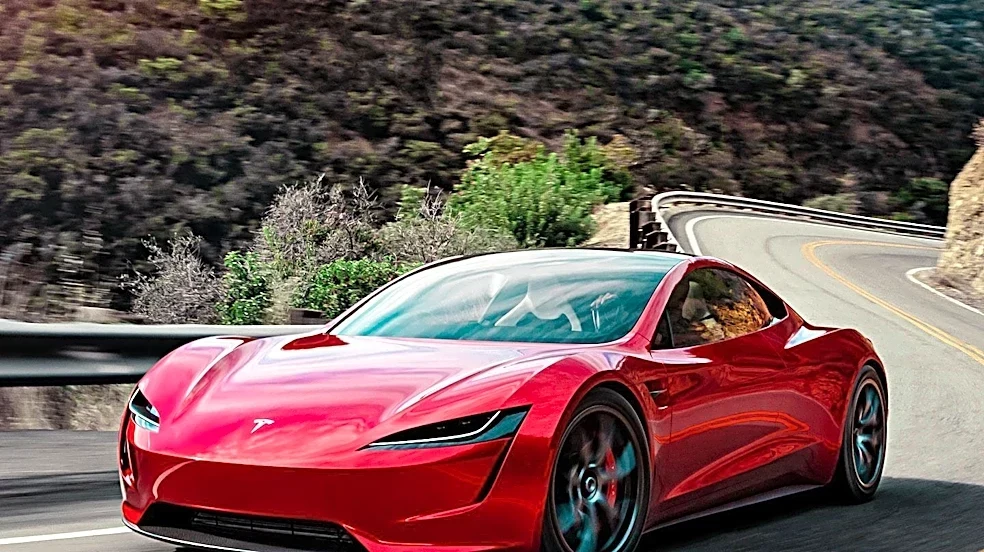
Florida Governor Ron DeSantis has indicated his support for making Tesla's newly unveiled Flying Roadster street legal in the state. This comes after Elon Musk showcased a prototype of the vehicle performing various stunts, including driving upside down
and jumping over other cars, at an event in McGregor, Texas. The demonstration highlighted the Roadster's unique capabilities, which include using fans to create a pressure difference for inverted driving and SpaceX-derived thrusters for lift, flips, and controlled landings. Governor DeSantis reacted positively to the demonstration, stating on X (formerly Twitter) that Florida would ensure the vehicle's legality, at least for use in communities like The Villages to 'leapfrog golf carts.' Tesla has stated that the 'Rocket' version of the Roadster, equipped with 10 nozzles for thrust and rotation, is not currently approved for public road use, with production targeted for 2028. The governor did not provide specific regulatory plans or a timeline for this initiative.
Why It's Important?
Governor DeSantis's endorsement of legalizing the Flying Roadster could position Florida as a pioneer in accommodating advanced automotive technology. This move could attract further innovation and investment from companies like Tesla to the state, potentially fostering a new sector within Florida's economy related to advanced mobility. For consumers, the prospect of flying cars becoming street legal could revolutionize personal transportation, offering new levels of convenience and speed, particularly in areas with significant traffic congestion. However, it also raises significant regulatory and infrastructure challenges, such as air traffic control for low-altitude vehicles, safety standards, and the necessary modifications to existing road systems. The initiative could also spark a broader national conversation about the future of transportation and the regulatory frameworks needed to support such innovations, potentially influencing other states to consider similar legislative changes.
What's Next?
Following Governor DeSantis's statement, the next steps would likely involve state legislative bodies and transportation authorities in Florida beginning to explore the regulatory framework required to make a vehicle like the Tesla Flying Roadster street legal. This would entail developing new laws and safety standards that address the unique operational characteristics of flying cars, such as their ability to operate in three dimensions. Tesla, on its part, would need to continue its development and testing, aiming for its 2028 production target, while also engaging with regulatory bodies to ensure compliance. Public discourse will likely intensify regarding the practicalities, safety implications, and environmental impact of integrating flying vehicles into daily life. Other states and federal agencies will also be closely watching Florida's approach, as it could set a precedent for future regulations concerning advanced aerial mobility across the United States.
Beyond the Headlines
The potential legalization of flying cars in Florida, as championed by Governor DeSantis, extends beyond mere transportation innovation; it touches upon profound societal and urban planning implications. The integration of such vehicles could drastically alter urban landscapes, necessitating new infrastructure for landing and takeoff, and potentially leading to a re-evaluation of zoning laws. Ethically, questions of equitable access to such advanced technology, noise pollution, and privacy concerns related to aerial surveillance will likely emerge. Legally, the distinction between air traffic regulations and road traffic laws will blur, requiring a comprehensive overhaul of existing legal frameworks. Culturally, the widespread adoption of flying cars could shift perceptions of personal freedom and mobility, potentially creating a new class of transportation that further stratifies society. This development could mark a significant long-term shift in how cities are designed, how people commute, and how regulatory bodies adapt to rapidly evolving technological advancements.