





What's Happening?
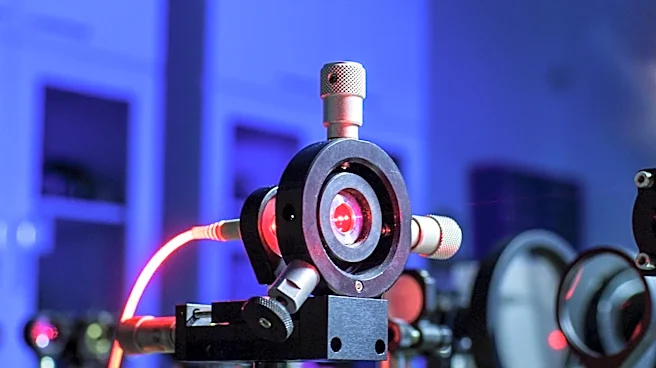
Roadrunner Venture Studios has officially opened its $25 million state-backed quantum lab in Albuquerque, New Mexico. The facility, located in a 35,000-square-foot warehouse within Downtown Albuquerque’s Innovation District, is a key component of New Mexico's
broader $450 million initiative over the past two years to cultivate a quantum industry and workforce. State Representative Meredith Dixon, D-Albuquerque, was instrumental in securing the state funding for this project. The lab aims to provide essential infrastructure and partnerships for quantum companies. Several firms have already committed to the facility, including Boston-based QuEra, which plans to establish a $4 million open-access facility for hybrid quantum computing research. Australian company Diraq also announced plans to open a research and development space at the lab by year-end, featuring a dilution refrigerator from Denver-based Maybell Quantum Industries. This refrigerator is capable of achieving temperatures approximately 500 times colder than deep space, crucial for manipulating quantum bits (qubits) in quantum processors.
Why It's Important?
The opening of the Roadrunner Quantum Lab signifies a substantial investment by New Mexico in the burgeoning field of quantum technology, positioning the state as a potential leader in this advanced sector. This initiative is crucial for U.S. technological competitiveness, as quantum computing promises to revolutionize various industries by solving complex problems currently beyond the capabilities of traditional computers. The lab's focus on providing infrastructure and partnerships will attract leading quantum companies and researchers, fostering innovation and creating high-tech jobs. The presence of companies like QuEra and Diraq, along with the advanced technology from Maybell Quantum Industries, demonstrates the lab's capacity to facilitate cutting-edge research and development. This investment not only aims to build a robust quantum industry but also to develop a skilled workforce, ensuring long-term economic growth and technological advancement for the region and the nation. The ability of quantum computing to address challenges in areas such as infectious disease, cancer, and climate change highlights its profound potential societal impact.
What's Next?
With the Roadrunner Quantum Lab now operational, the immediate next steps involve the establishment and expansion of the committed companies within the facility. QuEra will proceed with building its $4 million open-access facility, and Diraq is expected to open its research and development space by the end of the year. The lab will likely continue to attract additional quantum technology companies and researchers, further solidifying New Mexico's position in the quantum industry. The state's ongoing $450 million investment will support further development of the quantum workforce and infrastructure, potentially through collaborations with institutions like the University of New Mexico’s Quantum New Mexico Institute. The success of this lab could serve as a model for other states looking to invest in emerging technologies. Future developments will include advancements in quantum computing applications, potentially leading to breakthroughs in various scientific and industrial fields, and the commercialization of quantum technologies.
Beyond the Headlines
The establishment of the Roadrunner Quantum Lab represents more than just a technological advancement; it embodies a strategic shift in regional economic development and national technological sovereignty. By investing heavily in quantum computing, New Mexico is not only creating a new industry but also cultivating a highly specialized workforce, which could mitigate brain drain and attract top talent to the state. This initiative also highlights the critical role of state-backed funding in fostering high-risk, high-reward technological ventures that private capital might be hesitant to fully support in their nascent stages. Ethically, the development of powerful quantum computing capabilities raises questions about data security, privacy, and the potential for misuse, necessitating parallel discussions on regulatory frameworks and responsible innovation. Culturally, the lab could transform Albuquerque into a hub for scientific and technological innovation, fostering a new identity for the city. The long-term implications include a potential redefinition of national security, economic power, and scientific discovery, as quantum computing promises to unlock solutions to problems previously deemed intractable, from advanced materials science to complex logistical challenges.