







What's Happening?
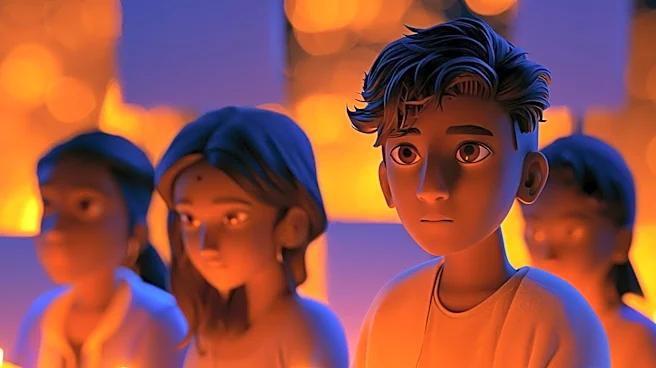
The animated feature 'Bouchra,' now available on VOD, Digital, and MUBI, centers on a jackal woman living in New York City who is writing her first feature film while navigating complex personal relationships. Directed by Orian Barki and Meriem Bennani,
the film is vying for awards season consideration. The directors aimed to create an adult animation that tells an intimate story, utilizing naturalistic dialogues derived from real conversations and improv. A core element of the film is the protagonist's phone calls with her mother, which are recreations of Bennani's own conversations with her mother. The animation style combines 3D elements to create depth and a grounded feel, allowing for detailed character portrayal, such as characters wearing different clothes daily to signify the passage of time. The film also incorporates surreal and symbolic layers, leveraging the animated medium to explore deeper themes. The narrative explores the protagonist's life as a lesbian in New York and Casablanca, showcasing her desires and challenges in romantic relationships beyond the central mother-daughter dynamic.
Why It's Important?
The release of 'Bouchra' is significant as it pushes the boundaries of adult animation, offering a nuanced and complex narrative that deviates from conventional story structures. By focusing on subtleties of relationships and real-life complexities rather than traditional protagonist-antagonist conflicts, the film challenges audience expectations for animated features. Its use of multiple languages and a unique aesthetic also tests the perceived market limitations for non-English or arthouse animated content. The film's handcrafted and intimate approach stands in contrast to the rapidly produced, AI-driven content prevalent today, suggesting a demand for personal and human-centric storytelling. This could influence future animation productions to explore more diverse themes and artistic styles, moving away from formulaic narratives and towards more emotionally resonant and experimental works. The film's success in connecting with audiences globally, despite its specific cultural context, highlights the universal appeal of authentic human experiences, even when portrayed through anthropomorphic characters.
What's Next?
As 'Bouchra' continues its run on VOD, Digital, and MUBI, its reception during awards season will be a key indicator of its impact. Positive recognition could encourage more studios and independent filmmakers to invest in adult-oriented animated features that prioritize complex storytelling and unique artistic visions. The film's success may also pave the way for greater acceptance of diverse narratives and non-traditional animation styles in the mainstream market. Directors Orian Barki and Meriem Bennani may find increased opportunities to develop similar projects, further expanding the scope of animated cinema. The ongoing audience engagement and critical discourse surrounding 'Bouchra' will likely contribute to a broader conversation about the potential of animation as a medium for mature, introspective, and culturally specific stories, potentially inspiring a new wave of animated content that challenges existing industry norms.
Beyond the Headlines
Beyond its immediate release and awards potential, 'Bouchra' delves into deeper implications regarding the nature of storytelling and audience engagement in the digital age. The film's emphasis on naturalistic dialogue and character development, drawn from real-life experiences, highlights a growing desire for authenticity in media. In an era increasingly dominated by AI-generated content and rapid consumption, 'Bouchra' serves as a counter-narrative, demonstrating the enduring value of handcrafted, personal artistic expression. Its exploration of a lesbian character's life in diverse cultural settings also contributes to broader discussions about representation and inclusivity in film, challenging the notion of a singular 'universal' narrative. The film subtly critiques market-driven assumptions about audience preferences, suggesting that viewers are open to complex, multilingual, and artistically unconventional works. This could foster a long-term shift in how animated films are conceived and marketed, encouraging creators to prioritize artistic integrity and emotional depth over perceived commercial viability.