
What's Happening?
Japan's Agency for Natural Resources and Energy has announced significant changes to its Feed-in Tariff (FIT) and Feed-in Premium (FIP) schemes for renewable energy. Starting from fiscal year 2027, ground-mounted
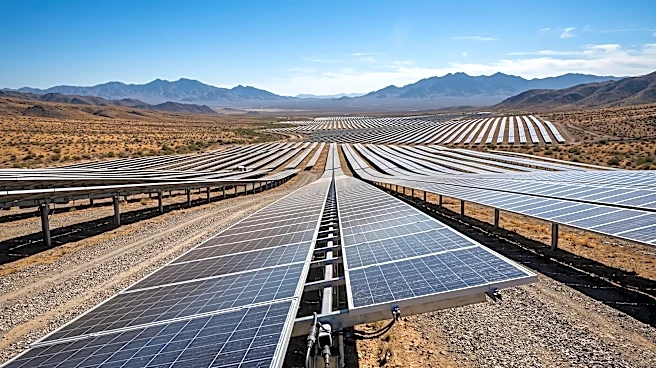
solar projects with a capacity of 10kW and above will no longer be eligible for these support mechanisms. The deadline for new applications and modification requests for the 2026 fiscal year is December 11. This policy shift indicates a move away from direct subsidies for larger solar installations. The announcement also specifies that application materials must include a grid connection agreement, with different rules applying to certain existing project conversions and auctioned projects. This decision reflects a broader trend in some developed nations to adjust renewable energy incentive programs as the industry matures and costs decrease.
Why It's Important?
This policy change in Japan is significant for the global renewable energy sector, particularly for solar developers and investors. The phasing out of FIT and FIP support for large ground-mounted solar projects could lead to a re-evaluation of investment strategies in Japan's solar market. Developers may need to seek alternative financing models or focus on smaller-scale projects that might still qualify for some form of support. This move could also signal a shift towards greater market competition and efficiency within Japan's renewable energy landscape, potentially encouraging technological innovation to reduce costs further. For international companies looking to enter or expand in the Japanese market, understanding these evolving subsidy structures will be crucial for long-term viability and project planning.
What's Next?
Following this announcement, solar developers and energy companies operating in Japan will likely accelerate their efforts to secure approvals for ground-mounted projects exceeding 10kW before the December 11, 2026 deadline for the 2026 fiscal year. Beyond that, the industry will need to adapt to a new market environment without direct FIT and FIP support for these larger installations. This could lead to increased focus on corporate power purchase agreements (PPAs), self-consumption models, or other market-based mechanisms to ensure project profitability. The Japanese government may also introduce new policies or frameworks to support renewable energy development in different ways, such as through grid infrastructure improvements or research and development incentives, to continue its decarbonization efforts.
Beyond the Headlines
The decision by Japan to discontinue subsidies for large ground-mounted solar projects reflects a maturing renewable energy market where the cost of solar technology has significantly decreased. This shift could be interpreted as a move towards a more market-driven approach, pushing the solar industry to become more self-sufficient and competitive without government incentives. While it may present short-term challenges for developers accustomed to subsidy support, it could also foster greater innovation in project development, financing, and operational efficiency. This trend, if adopted by other nations, could reshape the global renewable energy investment landscape, emphasizing cost-effectiveness and market integration over direct financial aid.