



What's Happening?
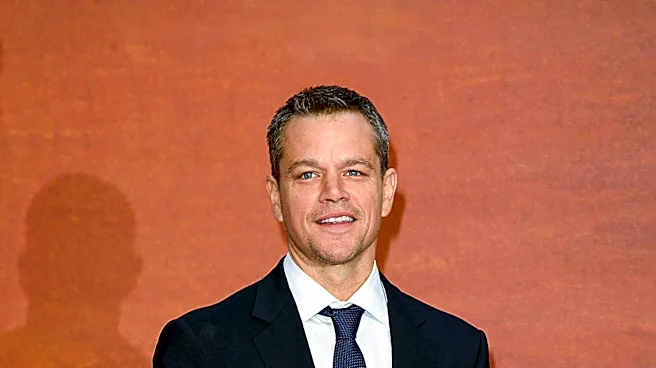
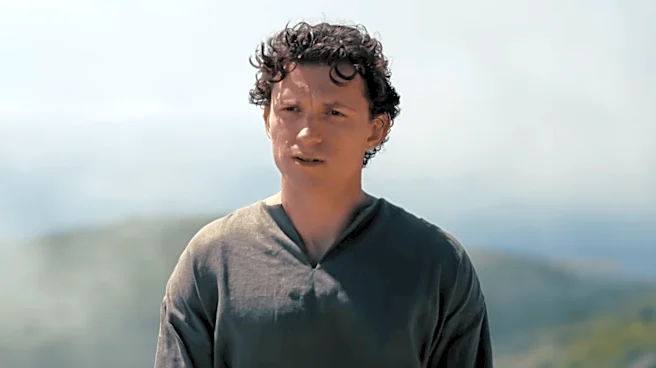
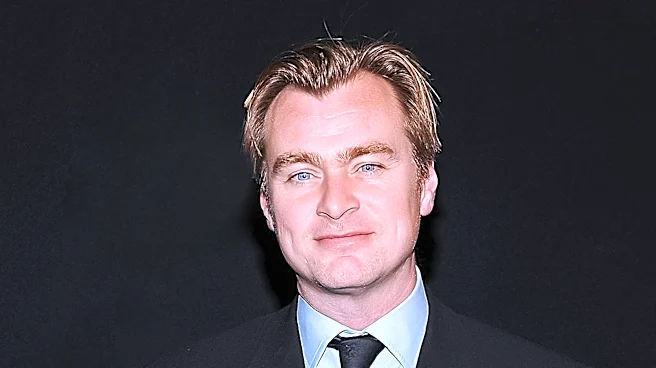
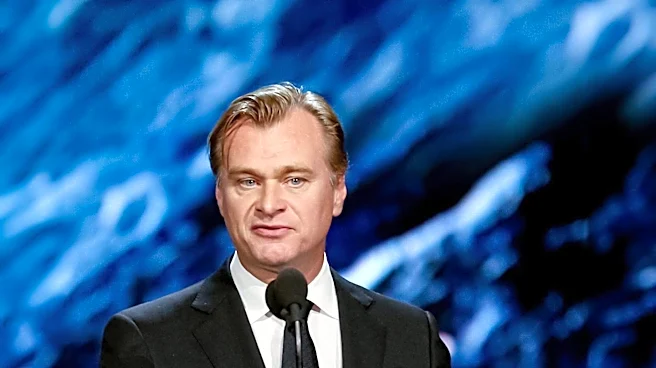
Director Christopher Nolan's adaptation of Homer's 'The Odyssey' has premiered, featuring a star-studded cast including Matt Damon as Odysseus, Tom Holland as Telemachus, and Anne Hathaway as Penelope. The film has generated debate among academics regarding
its fidelity to the source material, with Nolan opting for an interpretation rather than a literal transliteration. Critics have noted Nolan's efforts to knit together the episodic narrative, tying events like Poseidon's wrath to the Cyclops's blinding and reinterpreting Odysseus's encounter with the lotus. The film also incorporates elements from broader Greek mythology, creating a shared universe feel. Nolan's portrayal of Odysseus as a figure haunted by the costs of military victory, rather than a traditional action hero, and his attempt to link the narrative to the Sea People theory of the Late Bronze Age Collapse, are among the notable creative choices.
Why It's Important?
Christopher Nolan's 'The Odyssey' represents a significant cinematic undertaking, bringing one of the oldest and most influential works of literature to modern audiences through a director known for his ambitious and often complex storytelling. The film's approach to adapting classical literature sparks important discussions about artistic interpretation versus historical or textual accuracy, a perennial debate in adaptations. Nolan's decision to recontextualize Odysseus's character and integrate historical theories like the Sea People into a mythological narrative could influence how future filmmakers approach ancient texts, encouraging more thematic depth and contemporary relevance. The film's reception, particularly regarding its visual style and use of IMAX, also contributes to ongoing conversations about cinematic presentation and the audience experience, especially given Nolan's strong advocacy for specific viewing formats.
What's Next?
The critical and audience reception of Christopher Nolan's 'The Odyssey' will likely influence future large-scale adaptations of classical literature. If the film achieves commercial success despite mixed reviews on its visual style, it could encourage studios to invest in more ambitious, director-driven interpretations of ancient texts. The ongoing debate among academics and critics about Nolan's fidelity to the source material will continue to shape discussions around adaptation theory in film studies. Furthermore, the film's performance may impact Nolan's future projects, particularly regarding his visual aesthetic and his continued use of IMAX, as audiences and critics weigh the effectiveness of his preferred cinematic presentation against the narrative content. The performances of the ensemble cast, particularly Matt Damon's portrayal of Odysseus, will also be scrutinized for potential awards recognition.
Beyond the Headlines
Nolan's 'The Odyssey' delves into deeper implications beyond a simple retelling of a classic. By portraying Odysseus as a war-haunted figure, the film explores themes of trauma, the moral costs of victory, and the psychological burden of leadership, offering a contemporary resonance to an ancient epic. The integration of the Sea People theory, while speculative, highlights a fascinating intersection of mythology and historical inquiry, prompting audiences to consider the historical underpinnings of ancient narratives. The film also implicitly critiques the traditional heroic archetype, presenting a more complex and flawed protagonist. Nolan's visual choices, often described as visually dull despite his preference for high-resolution formats, raise questions about the relationship between technological spectacle and artistic vision, and whether technical prowess always translates to imaginative or memorable visual storytelling. This adaptation contributes to the ongoing cultural conversation about how ancient stories can be reinterpreted to reflect modern sensibilities and concerns.