



What's Happening?
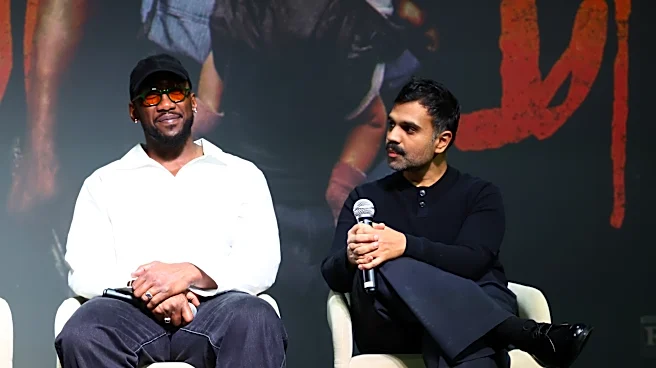
Director Bassam Tariq has publicly disclosed the reasons behind his departure from Marvel Studios' 'Blade' film project, which has since been officially canceled. Tariq, initially tapped to direct the Mahershala Ali-led superhero movie in 2021, stated
in an interview with The New Arab that he left because 'life's too short to make s**t films.' He cited significant creative disagreements, particularly concerning the script development. Tariq explained that he found it challenging and detrimental to his credibility to cast actors and build the film without a finalized script, requiring them to simply trust his vision. This situation led to him feeling like he was losing credibility with his actors, as major decisions were being made by the corporate entity in the background, leaving him to deliver potentially bad news. Marvel Studios had previously attributed his exit to 'shifts in our production schedule.' The film's cancellation follows multiple updates and frustrations from lead actor Mahershala Ali, with Marvel Cinematic Universe orchestrator Kevin Feige also expressing feelings of failure regarding the project.
Why It's Important?
Tariq's candid explanation sheds light on the creative tensions that can arise within major studio productions, particularly within the Marvel Cinematic Universe. His emphasis on directorial control over the script highlights a common point of contention between filmmakers and large studios, where corporate oversight can sometimes supersede artistic vision. This situation underscores the challenges of maintaining creative integrity within a franchise-driven model, where individual film narratives must often align with a broader cinematic universe. The cancellation of 'Blade,' despite having a high-profile star like Mahershala Ali attached, signifies a significant setback for Marvel Studios and suggests potential internal struggles in managing its extensive slate of projects. It also raises questions about the studio's development process and its ability to foster a collaborative environment that satisfies both creative talent and corporate objectives. The public nature of Tariq's comments could influence how future directors approach collaborations with major studios, potentially leading to more stringent demands for creative autonomy.
What's Next?
With the official cancellation of the 'Blade' film, there are no immediate plans for a live-action adaptation of the character within the Marvel Cinematic Universe. Marvel Studios will likely continue to focus on its upcoming releases, such as 'Avengers: Doomsday,' as it navigates the aftermath of this high-profile project failure. The studio may re-evaluate its development processes for future films, particularly those involving established characters and new creative teams, to prevent similar issues. For Bassam Tariq, his public stance on creative control may influence his future directorial opportunities, potentially attracting projects that offer greater artistic freedom. The experience could also lead to broader discussions within the film industry about the balance of power between directors and studios, especially in the context of large franchises. While the 'Blade' film is off the table, elements from its development, such as Mahershala Ali's physical training and some costume designs, have reportedly found use in other projects, indicating that not all efforts were entirely in vain.
Beyond the Headlines
The 'Blade' project's tumultuous journey and eventual cancellation highlight deeper implications regarding the sustainability and creative health of expansive cinematic universes. The struggle for directorial control, as articulated by Tariq, points to a potential systemic issue where the demands of a shared universe can stifle individual film visions. This situation raises ethical questions about the creative freedom afforded to filmmakers when working on established intellectual properties owned by large corporations. The public acknowledgment of failure by both Tariq and Kevin Feige could signal a growing transparency within the industry about the difficulties of managing such ambitious projects. Furthermore, the incident might contribute to a broader cultural shift where audiences and creators increasingly value authentic artistic expression over purely commercial considerations, potentially influencing future production models in Hollywood. The long-term impact could see studios re-evaluating their approach to talent management and project development to ensure a more harmonious creative process.