




What's Happening?
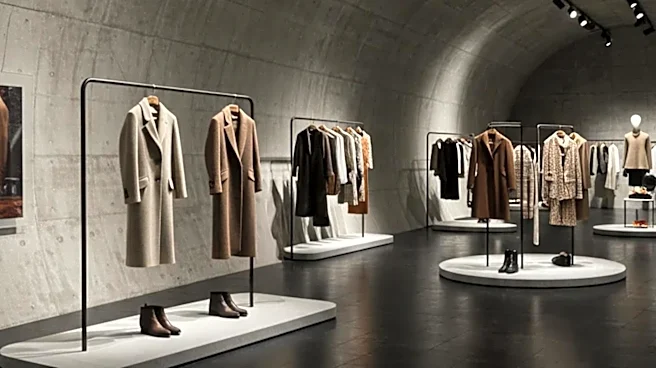
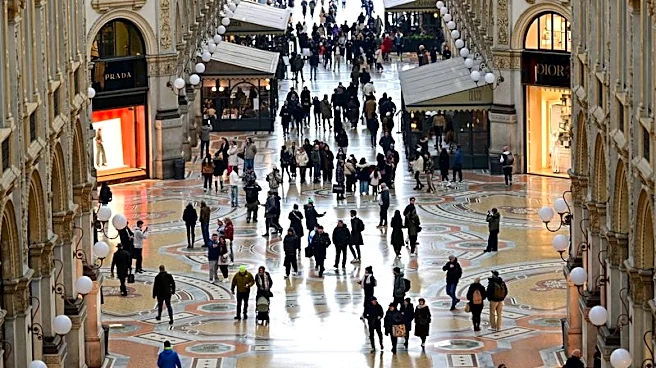
Stone Island has unveiled its revamped Milan flagship store, now its largest globally, spanning 6,458 square feet over two floors. The store, located in a 1930s building on central Corso Matteotti, features a new design concept by Samir Bantal of OMA/AMO.
A key element is a sculptural centerpiece made from carved cork, dubbed 'Hyperobject,' which connects the store's spaces and integrates a recessed display system. The orange stairs, a signature feature in other Stone Island stores, serve as a focal point for displaying objects and hosting cultural initiatives. According to CEO and President Robert Triefus, the renovation, which took nine months, aims to create a strong 'sense of place' and reflect Stone Island's values, emphasizing a research-intensive approach to materials and a collaborative design community.
Why It's Important?
The expansion and redesign of Stone Island's Milan flagship underscore a significant trend in global retail: the prioritization of experiential shopping. For U.S. consumers and retailers, this move highlights the increasing demand for immersive brand environments that go beyond mere product display. Stone Island's focus on unique materials, architectural design, and cultural initiatives within its retail space sets a new benchmark for engaging customers. This strategy is particularly relevant in the U.S. market, where brands are constantly seeking ways to differentiate themselves and build stronger community ties. The emphasis on 'sensorial experience' and 'community' can influence how U.S. brands approach their physical retail presence, potentially leading to more investment in store design, localized events, and collaborations with artists and designers to create unique brand narratives.
What's Next?
Stone Island's retail optimization strategy, which includes this Milan flagship revamp, indicates a continued focus on elevating the customer experience. The brand plans to host a calendar of activations, including DJ sets, talks about subcultures, and panel discussions on materiality, with the upper level of the store dedicated to these experiences. This approach suggests that future retail success will increasingly be measured not just by sales, but also by the quality and uniqueness of the customer experience. For the U.S. market, this could mean more brands adopting similar strategies, transforming stores into cultural hubs that offer more than just products. Stone Island's CEO, Robert Triefus, also noted the brand's direct-to-consumer channel growth and its strategic partnerships with major U.S. retailers like Nordstrom and Saks, indicating a continued effort to strengthen its footprint in North America through both direct and wholesale channels.
Beyond the Headlines
The revamped Stone Island flagship reflects a deeper philosophical shift in retail, moving from transactional spaces to 'laboratories' of brand identity and community engagement. This evolution challenges traditional retail metrics and encourages a more holistic view of brand value. The use of unconventional materials and collaborative design, as highlighted by Samir Bantal, also points to a growing emphasis on sustainability and craftsmanship in luxury retail. For the U.S., this could inspire a re-evaluation of supply chains and design processes, favoring locally sourced materials and artisanal collaborations. Culturally, these experiential stores become new public spaces, fostering subcultures and communities around shared interests, which can have a significant impact on urban social dynamics and consumer identity formation. The blend of commerce and culture in these spaces redefines the role of retail in modern society.