

What's Happening?
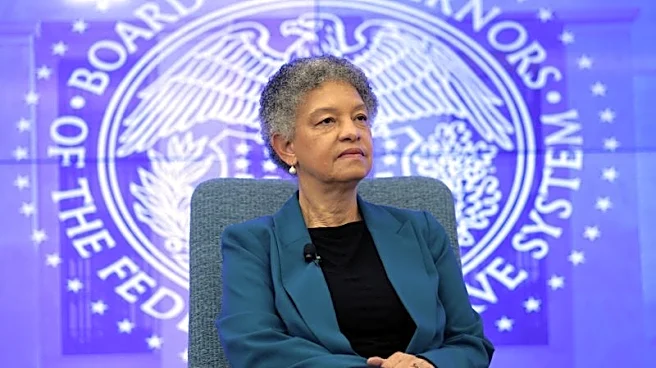
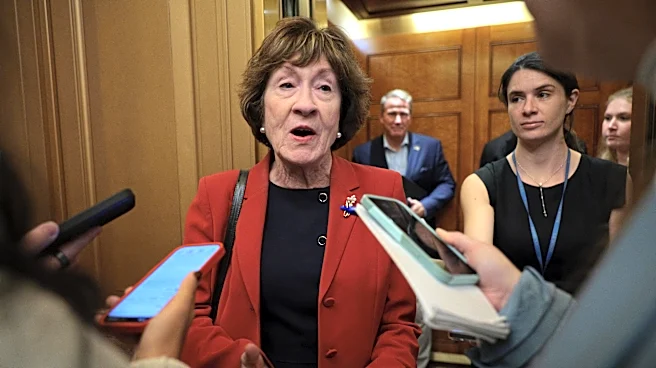
Boston Federal Reserve President Susan Collins stated on Saturday that she favors a steady, gradual approach to raising interest rates. Speaking at a housing conference in Boston, Collins emphasized that this measured pace is the most effective way to navigate
the current uncertainties within the U.S. economy. While remaining open-minded, she indicated that a gradual path of tightening appears appropriate for now, clarifying that 'gradual' does not imply a fixed rhythm of moves. Collins acknowledged two-sided risks to the economy: persistent high inflation that is broadening, and a stable job market with potential for acceleration. Conversely, she noted the economy's vulnerability to further shocks and the possibility that increased medium and longer-term borrowing costs might suppress demand more than anticipated. Despite inflation exceeding the 2% target for over five years, these factors, in her view, argue against accelerating the pace of rate increases. Recent price data and a stronger labor market have led her to believe that the policy rate path over the next year might be somewhat higher than previously expected.
Why It's Important?
President Collins's stance is significant as it pushes back against recent discussions within the Federal Reserve regarding potentially larger rate hikes, which gained traction after Governor Christopher Waller's remarks and recent inflation data. Her preference for a steady, modest pace could temper expectations for a more aggressive move in December, potentially easing pressure on the front end of the Treasury curve. However, her acknowledgment that the eventual peak in rates might be higher suggests a longer hiking cycle, which could continue to support the U.S. dollar and limit dovish tailwinds for gold. This approach aims to allow the economy sufficient time to absorb higher borrowing costs, mitigating the risk of an overly aggressive tightening that could inadvertently trigger a sharper economic slowdown. Her comments provide insight into the internal Fed debate, signaling a preference for careful calibration over rapid adjustments, which impacts market expectations for future monetary policy and investment strategies.
What's Next?
The Federal Reserve is widely expected to raise its target range for the federal funds rate by a quarter point at its December 8-9 meeting, with another increase anticipated in January. President Collins's comments suggest that while the overall tightening cycle may extend, the individual increments are likely to remain modest. This indicates that policymakers will continue to monitor incoming economic data closely, particularly inflation figures and labor market indicators, to inform their decisions. The debate within the Fed will likely continue to focus on the pace of hikes rather than whether to hike at all. Market participants will be watching for further statements from other Fed officials to gauge the consensus on the speed and ultimate level of interest rate increases. The trajectory of inflation and the resilience of the job market will be critical in determining the Fed's subsequent actions and whether Collins's 'higher for longer' but 'gradual' approach prevails.
Beyond the Headlines
President Collins's emphasis on a 'gradual path' reflects a broader strategic consideration within central banking: balancing the immediate need to combat inflation with the risk of over-tightening and inducing a recession. This approach highlights the inherent uncertainty in economic forecasting and policy implementation, where the full effects of monetary policy actions are often delayed and complex. The 'two-sided risks' she identified underscore the delicate tightrope the Fed must walk—addressing persistent inflation without stifling economic growth or creating undue financial market instability. This cautious stance also suggests a recognition of potential lagged effects of previous rate hikes, allowing time for these to fully transmit through the economy. The long-term implication could be a more prolonged period of elevated interest rates, which could reshape investment landscapes, corporate borrowing strategies, and consumer spending habits, fostering a more disciplined economic environment but potentially slowing growth over time.