





What's Happening?
Palantir CEO Alex Karp has issued a warning to businesses about the potential economic pitfalls of heavily investing in artificial intelligence (AI). In an interview with CNBC, Karp expressed concerns that companies might not be gaining sufficient economic value
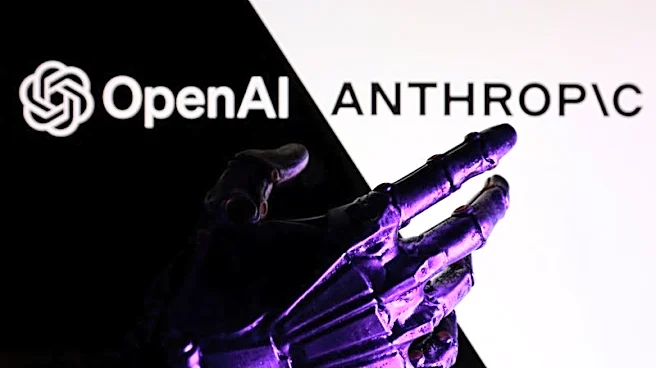
from their AI investments, particularly when relying on major AI providers like OpenAI and Anthropic. He highlighted the risk of becoming overly dependent on these providers, which could limit control and value retention. Karp advocates for the use of open-weight AI models, which offer more flexibility and adaptability for businesses. His comments come as companies are increasingly expanding their AI budgets to integrate AI into various business functions.
Why It's Important?
Karp's warning underscores the need for businesses to carefully evaluate their AI investments and consider the long-term implications of dependency on major AI providers. As AI becomes more integral to business operations, companies must ensure that their investments lead to tangible improvements and strategic advantages. The push for open-weight AI models reflects a broader industry trend towards greater transparency and control over AI technologies. This approach could help businesses mitigate risks associated with proprietary AI models and foster innovation by allowing more customization and adaptability.
Beyond the Headlines
The debate over AI investment strategies also touches on broader issues of national security and technological sovereignty. As AI technologies advance, ensuring that businesses and governments maintain control over critical systems becomes increasingly important. Open-weight AI models could play a role in enhancing national security by providing more adaptable and secure systems. Additionally, the economic dynamics of AI investments may influence regulatory discussions, as policymakers seek to balance innovation with security and ethical considerations.