






What's Happening?
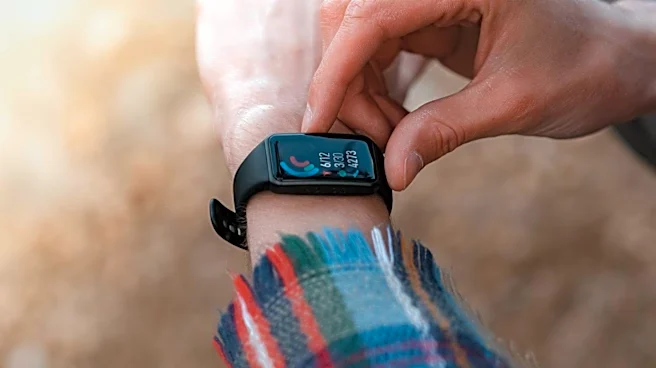
Researchers at Wits University are examining the growing influence of wearable technology, such as smartwatches, fitness trackers, and biometric rings, on how individuals monitor their health. These devices provide extensive data on steps, sleep, heart
rate, and VO2max, offering insights into physical activity and recovery. Dr. Dale Esliger, Professor of Digital Health Technologies at Loughborough University, emphasizes the critical role of trust in the validity of these metrics; if users lose faith in the accuracy of their devices, they are likely to abandon them. Professor Jon Patricios, Director of Wits Sport and Health (WiSH), highlighted a study showing that even minimal weekly exercise can significantly reduce cancer progression and mortality, though he notes that wearables are not essential for achieving these benefits. Professor Georgia Torres, Head of the Department of Exercise Science and Sports Medicine at Wits, focuses less on perfect accuracy and more on whether these devices effectively motivate people to become more active. The research also explores how wearable technology can shape behavior, sometimes leading users to prioritize data over their own physical instincts, potentially creating psychological barriers, particularly concerning sleep patterns.
Why It's Important?
The widespread adoption of wearable technology has significant implications for public health and individual well-being in the U.S. The debate over data accuracy versus behavioral change highlights a crucial tension in how these devices are perceived and utilized. If consumers lose trust in the validity of the data provided by fitness trackers, it could undermine public health initiatives that leverage such technology to encourage physical activity. Conversely, if these devices effectively motivate sedentary individuals to become more active, even with imperfect data, they could contribute to improved health outcomes and reduced healthcare burdens. The potential for users to prioritize device data over their own bodily sensations raises concerns about mental health and self-perception, particularly regarding sleep and overall well-being. Understanding these dynamics is vital for healthcare professionals and technology developers to create more effective and responsible health monitoring tools that genuinely support healthier lifestyles without fostering undue reliance on algorithms.
What's Next?
Future developments in wearable technology research at Wits University, particularly through the new Wits Brian and Dorothy Zylstra Sports Complex, will focus on a more holistic approach to health data. Interdisciplinary medical teams, including sports scientists, clinicians, biokineticists, and physiotherapists, will use wearable technology and AI-enabled platforms to analyze physical activity patterns in various settings. This integrated approach aims to provide a comprehensive view of health data, addressing existing research gaps. There is also a growing emphasis on making wearable technology more accessible, with smartphones potentially serving as a key tool for behavior change, especially for economically disadvantaged populations. The goal is to simplify technology to encourage inactive individuals to move more, focusing on nudging users toward healthier choices rather than solely on sophisticated metrics. This shift suggests a future where the utility of wearables is measured more by their ability to inspire positive behavioral changes than by their advanced data collection capabilities.
Beyond the Headlines
Beyond the immediate health metrics, the increasing reliance on wearable technology raises deeper ethical and psychological questions. The phenomenon of users trusting device data more than their own interoception—the ability to sense internal bodily states—could lead to a disconnect between subjective experience and objective measurement. For instance, a person might feel well-rested but believe they had poor sleep because their device indicated it, potentially impacting their mood and performance. This highlights a broader societal trend where technology mediates our understanding of ourselves. Furthermore, the accessibility gap in wearable technology points to potential health disparities, where those who can afford advanced devices may have more tools to manage their health, while others are left behind. The push for simpler, more accessible technology like smartphones as health motivators could help bridge this gap, but it also necessitates careful consideration of data privacy and security for all users. Ultimately, the long-term impact of wearables will depend on how effectively they can empower individuals to make informed health decisions without eroding their innate self-awareness.