





What's Happening?
A new paper produced by Compass Lexecon for Eurelectric, the Union of the Electricity Industry, asserts that negative electricity prices in European power markets are not indicative of market failure but rather a crucial signal for the growing need for power system
flexibility. The report highlights that these negative prices occur when there is an abundance of clean electricity, but the system lacks the flexibility to fully utilize it. European Union-wide requirements for power system flexibility are projected to double by 2030 and increase sixfold by 2050 from early 2020s levels. The paper notes significant variations across Europe; for instance, in 2025, Spain and the Netherlands experienced negative prices for nearly 7% of hours, while other markets had considerably lower frequencies. The analysis aims to inform policy debates on the challenges and opportunities in decarbonizing power systems. Eurelectric's Secretary General Kristian Ruby emphasized that these prices indicate where flexibility is most valuable, underscoring the necessity of accelerating electrification and unlocking storage and flexible demand to effectively use available clean electricity.
Why It's Important?
This perspective on negative electricity prices is significant because it reframes a seemingly problematic market phenomenon as an economic signal for necessary infrastructure adaptation. Instead of viewing negative prices as a flaw, the report positions them as a driver for investment in flexibility, storage, demand-side response, and electrification. This understanding can influence policy decisions across the U.S. and other developed economies as they transition to renewable energy sources. By recognizing negative prices as a signal for investment rather than a market distortion, policymakers can avoid unnecessary interventions and instead focus on removing barriers to efficient market signals and entry. This approach could lead to more resilient and efficient power grids capable of handling the intermittency of renewable energy, ultimately supporting decarbonization goals and ensuring a stable energy supply. The implications extend to energy companies, investors, and consumers, as increased flexibility can lead to more stable prices and a more reliable grid.
What's Next?
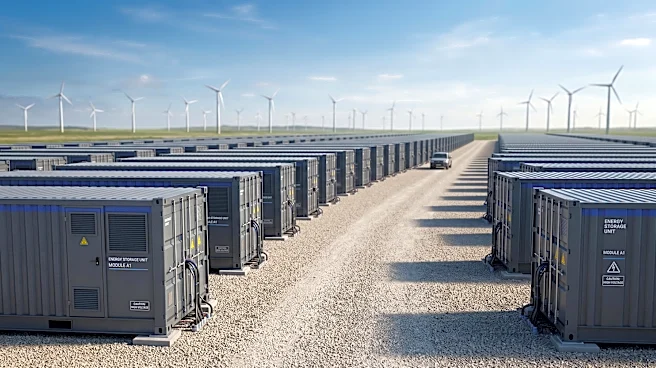
The insights from this Eurelectric paper are expected to contribute to ongoing policy debates within the European Union regarding power system decarbonization and flexibility needs. EU member states are currently developing their national flexibility needs assessments (FNAs) to identify gaps and their underlying causes in their respective power systems. The findings suggest that as these assessments progress, there will likely be a greater emphasis on policies that encourage investments in electricity storage, demand-side management, and grid infrastructure upgrades. This could lead to new regulatory frameworks designed to incentivize market participants to provide flexibility services. Furthermore, the report's call to minimize structural barriers and contractual arrangements that prevent efficient market responses indicates a potential push for market reforms. The success of countries like Finland, which saw a decrease in negative price frequency due to increased electrification and battery storage deployment, may serve as a model for other nations looking to enhance their grid flexibility.
Beyond the Headlines
The reinterpretation of negative electricity prices as a signal for flexibility rather than a market failure has profound implications for the future of energy markets and the transition to renewable energy. This perspective challenges conventional economic thinking that often views negative prices as an anomaly requiring intervention. Instead, it promotes a more dynamic and adaptive market design where price signals guide investment and innovation. Ethically, this approach supports the efficient use of clean energy, reducing waste and maximizing the benefits of renewable generation. Legally and culturally, it could foster a shift towards more decentralized energy systems, empowering consumers through demand-side response mechanisms and encouraging local energy storage solutions. In the long term, this understanding could accelerate the development of smart grids, advanced energy storage technologies, and more responsive energy consumption patterns, fundamentally reshaping how electricity is produced, distributed, and consumed in a decarbonized world.