




What's Happening?
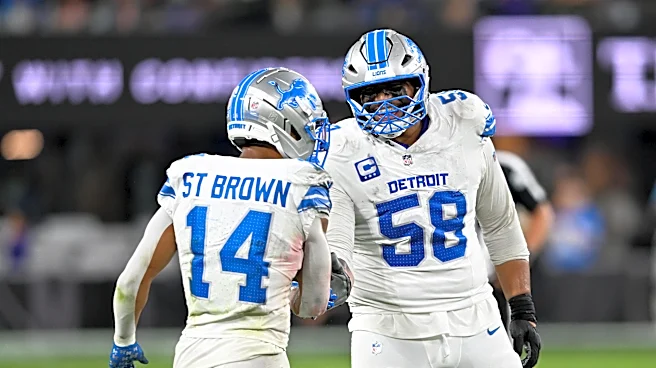
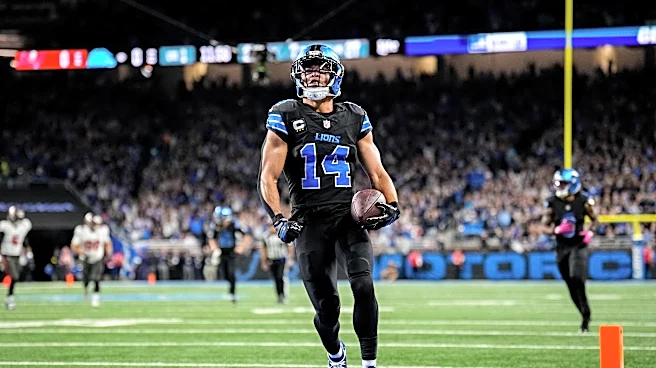
The Detroit Lions have restructured the contract of wide receiver Amon-Ra St. Brown, a move that has generated $20.8 million in salary cap space for the 2026 season. This financial maneuver involved converting $26 million of St. Brown’s salary into a bonus.
As a result, his salary cap charges in future years will increase by $5.2 million annually. St. Brown, a four-time Pro Bowler and two-time first-team All-Pro, signed a four-year, $120 million contract with $77 million guaranteed in April 2024, securing his tenure with the Lions through the 2028 season. This restructuring, along with a similar move for offensive tackle Penei Sewell, has collectively opened up $35.7 million in cap room for the team, positioning the Lions with the second-most cap space in the NFL for 2026, according to Overthecap.com and Spotrac.
Why It's Important?
This contract restructuring is a significant strategic move for the Detroit Lions, providing them with substantial financial flexibility ahead of the 2026 NFL season. The newly created cap space, totaling approximately $38 million, allows General Manager Brad Holmes to pursue various opportunities, including potential in-season trades to bolster the roster, signing free agents, or carrying over unused funds to the 2027 season. This flexibility is crucial for a team aiming to contend, as it enables them to address immediate needs or plan for future contract extensions for key players like tight end Sam LaPorta and safety Brian Branch. The ability to make such moves demonstrates the team's commitment to building a competitive roster and signals confidence in their core players, even as it shifts cap obligations to later years. For the players, while their total earnings remain unchanged, the immediate bonus provides financial security.
What's Next?
With the newly acquired cap space, the Detroit Lions have several strategic options. They could utilize the funds to make significant trades before the November 10, 2026, NFL trade deadline, potentially acquiring players to address areas of need, particularly in the defensive backfield, which has seen recent departures and injuries. Alternatively, the Lions might choose to carry over a portion of this cap space into the 2027 season, where they already project to have approximately $97 million in cap room, albeit with only 29 players currently under contract. This could facilitate future contract extensions for emerging stars like Sam LaPorta and Brian Branch, whose current deals are nearing their end. The timing of these restructures, just before the season opener, suggests the team is preparing for both immediate and long-term roster management decisions.
Beyond the Headlines
The restructuring of Amon-Ra St. Brown's contract, alongside Penei Sewell's, highlights a common financial strategy in the NFL: converting base salary into signing bonuses to create immediate cap space. While beneficial in the short term for roster flexibility, this practice pushes larger cap charges into future years, potentially creating future financial constraints if not managed carefully. This approach underscores the delicate balance NFL teams must strike between immediate competitiveness and long-term financial health. For players like St. Brown, who was a fourth-round pick in 2021, his journey from an undervalued draft prospect to a player whose contract is strategically manipulated for team benefit illustrates his significant rise in value and importance to the franchise. This also reflects the increasing financial sophistication required in modern NFL front offices to navigate the salary cap while maintaining a competitive team.