







What's Happening?
Mona King, a former executive at Hanes (now Hanesbrands), has established Mona & Associates Design, LLC, a minority woman-owned, LEED-certified biophilic design and wellness art studio in Winston-Salem. King, who previously developed a Computer Design team
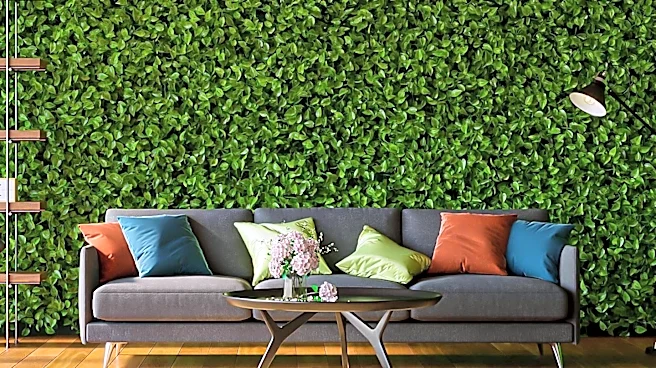
for Hanes, creating licensed apparel for major sports leagues and events, transitioned from the corporate world to pursue her passion for nature-inspired design. Her company specializes in bringing nature indoors through 'Living Aura™,' a signature line of preserved moss and botanical installations, alongside wellness workshops and biophilic design consulting for various clients. King's journey includes a Fine Arts degree from Indiana University and a second degree in Interior Architecture from UNC Greensboro, followed by a role as VP of Facility Design and Construction for a financial institution.
Why It's Important?
King's venture highlights a growing trend in the U.S. towards biophilic design, which emphasizes the integration of natural elements into built environments to improve human well-being. This approach is particularly significant in healthcare and corporate settings, where stress reduction and enhanced productivity are critical. By transforming sterile or industrial spaces into calming, nature-infused environments, King's work demonstrates the tangible benefits of biophilic design on mental health and overall wellness. Her success in securing commissions, such as the installation at Wake Forest Atrium Medical Center, underscores the increasing recognition of nature's role in healing and creating more humane spaces, potentially influencing design standards and practices across various U.S. industries.
What's Next?
Mona King's continued work with Mona & Associates Design, LLC is expected to further popularize biophilic design principles, particularly in the U.S. Southeast. Her involvement as a Board Member of the Piedmont Environmental Alliance (PEA) suggests a commitment to advocating for sustainable homes, environments, and businesses, which could lead to broader adoption of biophilic practices. The success of her installations, such as those in medical centers, may inspire other institutions to invest in similar designs, potentially creating new opportunities for biophilic designers and suppliers of natural materials. King's philosophy of 'nature isn't a decoration, it's a need' could become a guiding principle for future urban planning and architectural projects, fostering a greater connection between people and nature in everyday spaces.
Beyond the Headlines
The shift from a corporate career at Hanes to pioneering biophilic design reflects a deeper societal recognition of the intrinsic human need for connection with nature, often referred to as biophilia. This movement challenges traditional design paradigms that prioritize functionality and aesthetics over psychological well-being. King's work, particularly in transforming a former industrial factory into a healing space, highlights the potential for adaptive reuse of existing structures to serve new, human-centered purposes. It also underscores the ethical dimension of design, where the creation of spaces can actively contribute to the health and happiness of occupants. This trend could lead to a re-evaluation of building codes and design standards, emphasizing environmental psychology and the long-term impact of built environments on human flourishing.