






What's Happening?
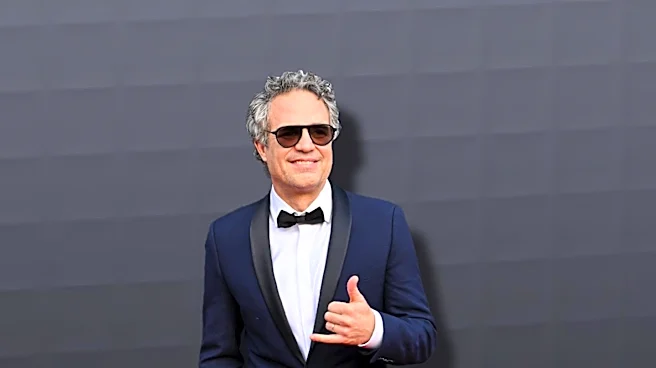
Over 170 Jewish artists, writers, religious leaders, and entertainment industry professionals have signed an open letter in support of actor Mark Ruffalo. This action follows accusations from Paramount that Ruffalo employed antisemitic tropes in his criticism
of the studio's proposed merger with Warner Bros. Discovery. The letter, published on Tuesday, calls the allegations against Ruffalo an 'outrageous smear campaign' and asserts that criticism of the merger and Israel's actions in Gaza does not equate to antisemitism. The controversy began with Ruffalo's social media post on August 21, where he criticized the Paramount-Warner Bros. deal for its implications on Hollywood jobs and media consolidation. In the same post, Ruffalo claimed the Ellison family played a role in what he termed 'genocide against Palestinians' and referenced Oracle's dealings with the Israeli army. David Ellison, Chairman and CEO of Paramount, and his father, Larry Ellison, co-founder of Oracle, are involved in the merger. A Paramount spokesperson found Ruffalo's remarks disturbing, stating they used antisemitic tropes to oppose a business deal. Ruffalo has rejected the antisemitism allegation, arguing that criticizing the Israeli prime minister, a military-technology contract, and involved executives is distinct from criticizing Jewish people.
Why It's Important?
This event highlights a significant and ongoing tension within the entertainment industry and broader society regarding the definition and application of antisemitism, particularly in discussions related to Israeli-Palestinian conflict and corporate interests. The open letter from a substantial group of Jewish entertainment figures underscores a division within the Jewish community itself on these issues, challenging the notion of a monolithic Jewish perspective. It also brings to the forefront the increasing scrutiny of corporate mergers, especially when they involve figures with controversial political or business ties. The debate impacts how public figures can express political opinions without facing accusations of prejudice, potentially chilling free speech or, conversely, holding individuals accountable for harmful rhetoric. The involvement of major studios like Paramount and Warner Bros. Discovery, along with tech giant Oracle, demonstrates the intersection of entertainment, technology, and geopolitics, where business decisions can become entangled with sensitive social and political debates. This situation could influence future corporate communications and public relations strategies, particularly for companies with diverse stakeholders and global operations.
What's Next?
The merger between Paramount and Warner Bros. Discovery remains unresolved, with a trial set for March 2027 after a coalition of 12 states and the Writers Guild of America filed lawsuits to block the transaction. Paramount has agreed not to close the deal until the trial concludes or June 1, 2027, whichever comes first. The ongoing legal battle will determine the future of this significant media consolidation. In the interim, the public discourse surrounding Mark Ruffalo's comments and the counter-arguments from various groups is likely to continue. Further statements or actions from the involved parties, including Paramount, Ruffalo, and the signatories of both open letters, could emerge. The Simon Wiesenthal Center and Creative Communities for Peace, who supported Paramount's initial statement, may also continue to voice their perspectives. This situation could also prompt other public figures to either be more cautious or more vocal in expressing their views on similar sensitive topics, potentially shaping the landscape of celebrity activism and corporate accountability in the entertainment sector.
Beyond the Headlines
This controversy delves into the complex interplay of corporate power, media consolidation, and geopolitical conflict, particularly the Israeli-Palestinian issue. The accusation of antisemitism against Ruffalo, and the subsequent defense by a large group of Jewish professionals, reveals a deeper societal struggle over how criticism of Israeli government policies is distinguished from antisemitism. It highlights the ethical dilemmas faced by public figures and corporations when their business dealings or personal statements intersect with highly charged political topics. The debate also touches upon the influence of wealth and power in shaping public narratives, as the Ellison family's business interests are directly linked to the merger and the criticisms leveled against it. This incident could contribute to a broader re-evaluation of corporate social responsibility and the expectations placed on companies and their leaders to align with certain ethical or political stances. Furthermore, it underscores the growing role of social media as a platform for both expressing and challenging opinions, often leading to rapid and widespread public reactions that can have significant professional and personal consequences.