



What's Happening?
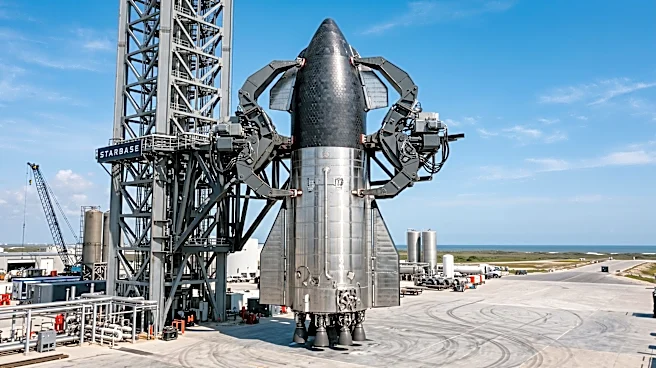
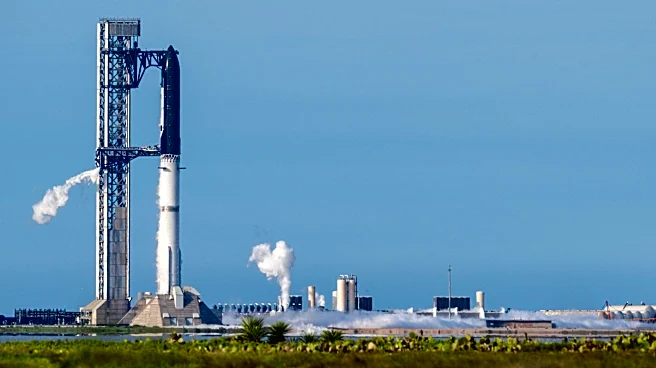
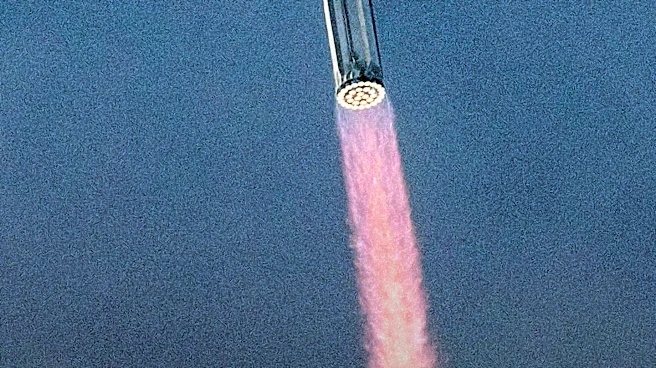
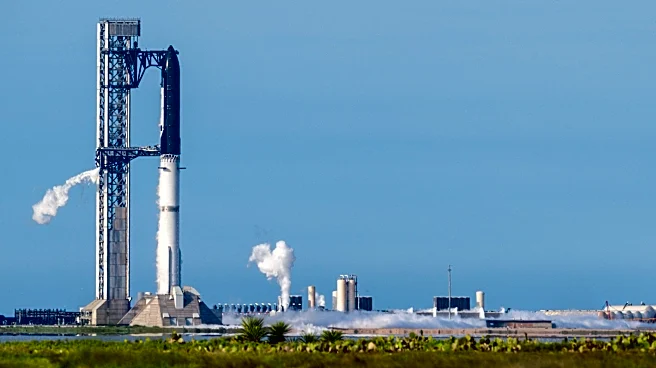
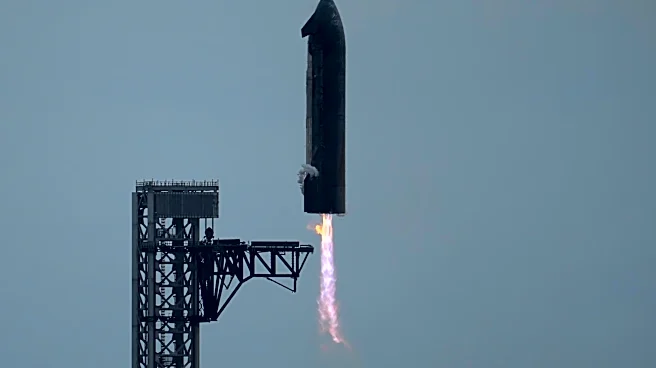
SpaceX successfully executed the first-ever catch of its Starship upper-stage with the 'Mechazilla' launch and landing tower platform in Texas. This achievement followed the deployment of 26 high-capacity 'V3' Starlink satellites. The mission marked a significant
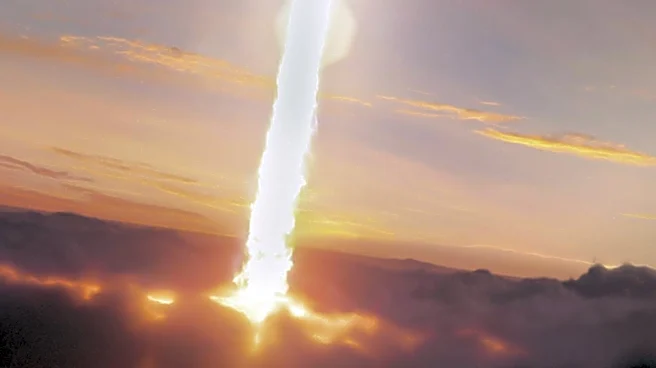
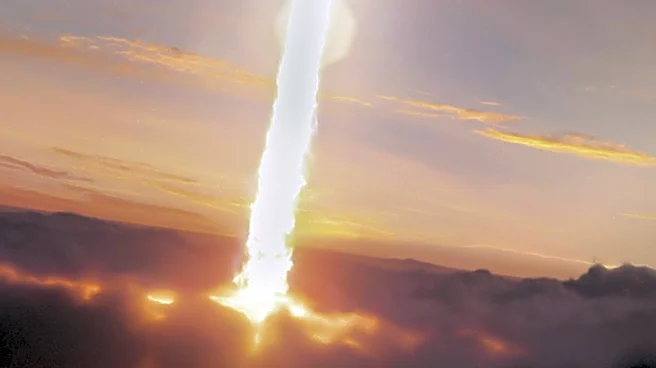
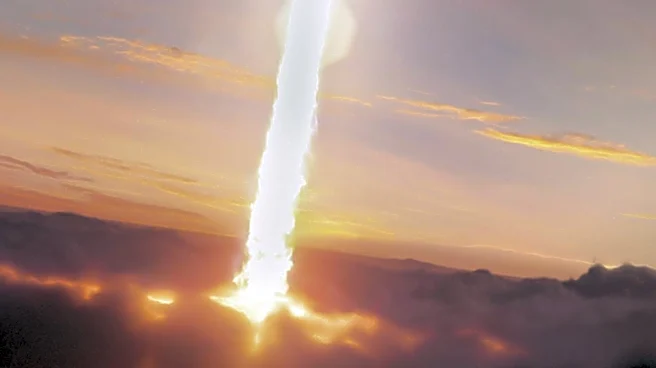
step towards rapid reusability for Starship, although the first-stage booster was intentionally ditched in the Gulf of Mexico due to engine underperformance. Concurrently, Amazon Leo experienced a major setback as 40 of its satellites were lost during the inaugural launch of United Launch Alliance's (ULA) Vulcan rocket, which suffered an anomaly approximately ten minutes into its flight. This incident occurred during the first of a 38-launch contract for Amazon Leo's constellation, impacting its deployment schedule.
Why It's Important?
SpaceX's successful Starship upper-stage recovery is a critical milestone for its goal of rapid reusability, which could revolutionize space travel and satellite deployment by significantly reducing costs and increasing launch frequency. This advancement is crucial for deploying future Starlink V3 and V4 satellites, as well as 'Starmind' AI satellites, potentially enhancing global broadband speeds and AI capabilities. Conversely, Amazon Leo's loss of 40 satellites represents a substantial blow to its Project Kuiper initiative, which aims to provide global broadband internet. This setback could delay Amazon's plans for initial commercial services and intensify pressure on ULA to resolve issues with its Vulcan rocket, highlighting the inherent risks in space launches and the competitive landscape of the burgeoning space economy.
What's Next?
SpaceX will now focus on inspecting Starship's engines and heat shield to refine future designs, with the priority being to reduce refurbishment time from weeks to days, and eventually to hours, to achieve true rapid reusability. The company plans to deploy a 'few hundred' V3 satellites by mid-2027 to significantly improve Starlink customer speeds. For Amazon Leo, ULA is investigating the root cause of the Vulcan rocket anomaly to determine corrective actions and return to flight. Despite the loss, Amazon Leo maintains its timeline for commercially launching services in 2026, with hundreds of flight-ready satellites on standby and upcoming launches planned with other providers like Arianespace. The incident also amplifies the demand for reliable launch capacity, potentially increasing SpaceX's dominance in the market.
Beyond the Headlines
The divergent outcomes for SpaceX and Amazon Leo underscore the high-stakes nature of the commercial space industry and its profound implications for global connectivity and technological advancement. SpaceX's progress in reusability could establish a new paradigm for space logistics, making ambitious projects like lunar and Martian missions more feasible. The incident with Amazon Leo highlights the fragility of complex space missions and the significant financial and strategic risks involved in developing new launch vehicles. This event could also intensify regulatory scrutiny on launch providers and potentially lead to a consolidation of launch services around more proven entities, further shaping the competitive dynamics of the space sector and influencing the pace at which global satellite internet constellations are deployed.