






What's Happening?
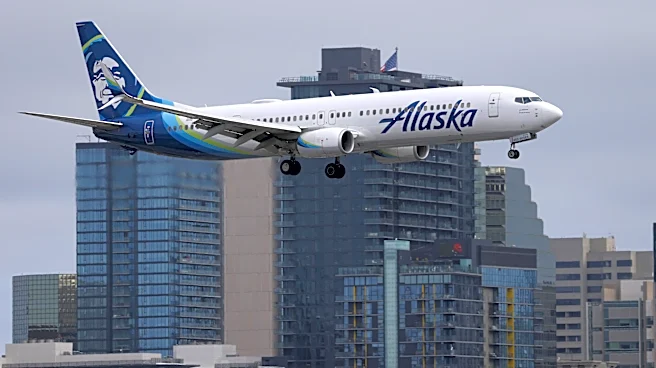
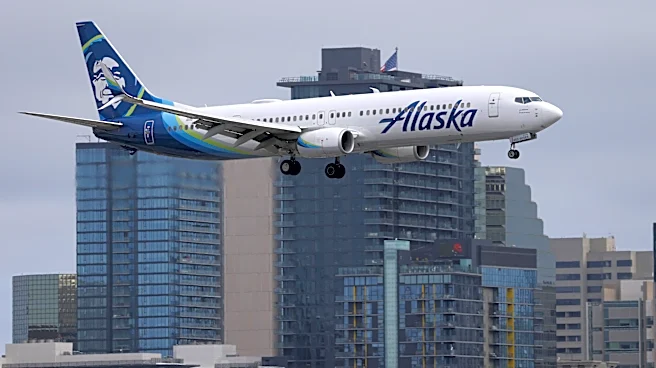
Union workers at Alaska Airlines are pushing for stronger job protections during ongoing contract negotiations, citing recent layoffs and concerns over increasing automation and artificial intelligence. The International Association of Machinists and Aerospace
Workers (IAM) is advocating for its members after Alaska Airlines announced plans to lay off approximately 200 non-union and support employees due to rising fuel costs and a challenging operating environment. Union members fear that additional positions, particularly customer-facing roles like reservations agents and airport agents, could be at risk. They emphasize the critical role human agents play during travel disruptions, such as recent IT outages and an FAA ground stop, arguing that automated systems often frustrate travelers. A public rally is scheduled for November 23 at Seattle-Tacoma International Airport to garner public support for their demands.
Why It's Important?
This push for job security by Alaska Airlines union workers highlights a growing tension across industries between corporate efforts to optimize operations through automation and the workforce's need for stable employment. The debate over the balance between human interaction and technological efficiency in customer service is particularly critical in the airline industry, where travel disruptions can lead to high-stress situations for passengers. If customer-facing roles are significantly reduced, it could impact service quality, customer satisfaction, and the airline's ability to effectively manage crises. For the broader U.S. economy, this situation reflects a trend where advancements in AI and automation are forcing unions and companies to redefine the future of work, potentially setting precedents for how other sectors negotiate job security in an increasingly automated landscape. The outcome of these negotiations could influence labor relations and employment strategies within the airline industry and beyond.
What's Next?
Contract negotiations between Alaska Airlines and the International Association of Machinists and Aerospace Workers (IAM) are expected to continue, with job security and the impact of automation being central issues. The union plans to hold a public rally on November 23 at Seattle-Tacoma International Airport to draw attention to their concerns and build public support. This public demonstration could intensify pressure on Alaska Airlines to address the union's demands for stronger job protections. The airline's response to these demands and the outcome of the negotiations will be closely watched by other labor unions and companies grappling with similar challenges related to technological advancements and workforce changes. Future developments may include further bargaining sessions, potential mediation, or, if an agreement isn't reached, possible labor actions.
Beyond the Headlines
The dispute between Alaska Airlines and its union workers over job security in the face of automation touches upon profound ethical and economic questions about the future of labor. As companies increasingly adopt AI and automated systems, the societal impact on employment, particularly in service sectors, becomes a critical concern. This situation forces a re-evaluation of the value of human labor in customer service, especially in industries where empathy, problem-solving, and nuanced communication are essential during stressful situations. The long-term implications could include a shift in the types of skills valued in the workforce, the need for extensive retraining programs, and potentially new models of labor agreements that account for technological displacement. This conflict also highlights the ongoing struggle for workers to maintain a voice and secure their livelihoods in an evolving economic landscape driven by technological innovation.