







What's Happening?
The Colonial Heights City Council in Virginia has voted 6-1 to proceed with considering an agreement for a $150 million to $180 million sports tourism complex. The proposed development, spearheaded by SINA Hospitality owner and CEO Ravi Patel, aims to transform
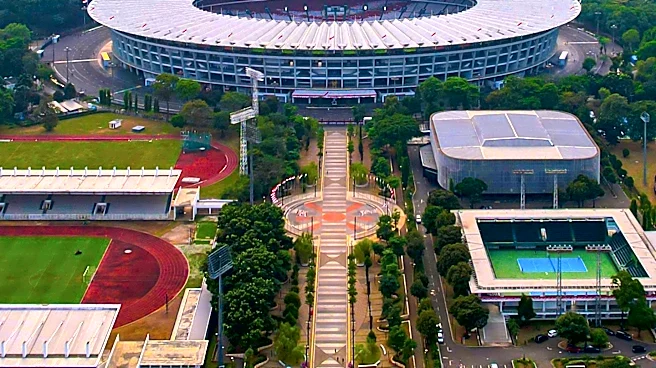
a 35-acre former landfill site that has been vacant for over two decades. The project envisions a 130-room SpringHill Suites by Marriott, a Mellow Mushroom restaurant, and six multi-use athletic fields designed for sports such as soccer, lacrosse, field hockey, and baseball. City Manager Doug Smith highlighted the potential for the complex to generate approximately $1.5 million in annual tax revenue through real estate, meals, and hotel occupancy taxes, describing it as a "transformational opportunity" for the city, which currently receives no revenue from the idle property. A significant aspect of the proposal is Patel's willingness to undertake the estimated $5 million environmental cleanup required for the former landfill site, a risk that has deterred previous developers.
Why It's Important?
This proposal holds significant importance for Colonial Heights, Virginia, as it represents a substantial economic development initiative for a long-underutilized piece of land. The projected annual tax revenue of $1.5 million could provide a considerable boost to the city's finances, enabling investments in public services or infrastructure. The creation of a sports tourism complex could also position Colonial Heights as a regional destination for athletic events, attracting visitors and their spending to local businesses. This project addresses the challenge of redeveloping environmentally compromised sites, demonstrating a potential model for transforming former landfills into productive community assets. However, the project also raises concerns among residents regarding potential traffic congestion, planning transparency, and the long-term financial burden of upkeep, which could impact local taxpayers. The council's decision to advance the proposal signifies a commitment to exploring new avenues for growth and revenue generation, despite community reservations.
What's Next?
Following the Colonial Heights City Council's vote, the next phase involves further consideration and negotiation of the agreement with SINA Hospitality. While the proposal has advanced, it is not yet definitively approved. City officials anticipate that if the project ultimately receives full approval, the sports tourism complex would take at least four to five years to complete. During this period, there will likely be continued public discourse and engagement, particularly concerning the residents' expressed concerns about traffic, planning, and potential long-term costs. The developer, Ravi Patel, will need to address these community concerns and work closely with the city to finalize the environmental cleanup plans and secure necessary permits. The city will also need to conduct thorough due diligence on the financial projections and the developer's capacity to deliver on the ambitious project, ensuring that the anticipated benefits outweigh the potential risks and costs to the community.
Beyond the Headlines
The Colonial Heights sports tourism complex proposal highlights a broader trend in urban development where municipalities are increasingly looking to sports and hospitality as drivers for economic revitalization, especially for challenging sites like former landfills. This approach not only addresses the need for new revenue streams but also tackles environmental remediation, turning liabilities into assets. The project's success could serve as a case study for other cities grappling with similar vacant or contaminated land. However, it also underscores the delicate balance between economic ambition and community impact. The concerns raised by residents about traffic and long-term costs reflect a common tension in development projects, where the promise of economic growth must be weighed against quality of life and fiscal responsibility. The project's progression will reveal how effectively Colonial Heights can navigate these complexities, potentially setting a precedent for how similar large-scale developments are managed in other U.S. cities.