



What's Happening?
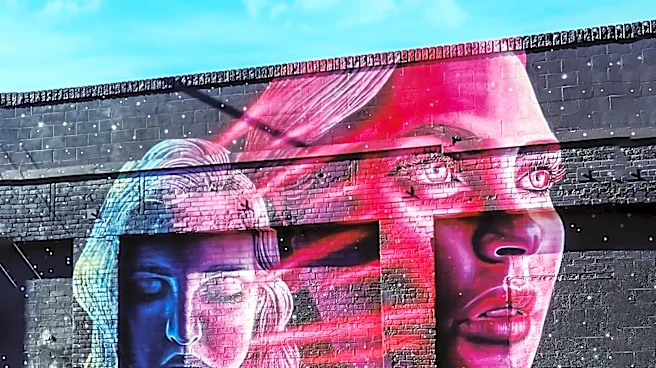
American artist JEKS has created a large-scale mural of Irish sprinter Rhasidat Adeleke in Waterford, Ireland, as part of the Waterford Walls Festival. This artwork celebrates Adeleke, one of Ireland's prominent young athletes, and is integrated into
a broader collection of murals across the city that depict Irish mythology, wildlife, abstract art, and local history. The Waterford Walls Festival, which began in 2015, has transformed the city's appearance and reputation by commissioning street artists to paint on previously neglected walls and buildings. The festival has grown significantly since its inception, expanding from a small event to a ten-day program featuring numerous artists, workshops, and other cultural activities. The initiative aims to use street art as a tool for urban regeneration and cultural expression.
Why It's Important?
This initiative highlights the growing trend of urban regeneration through public art, demonstrating how street art can revitalize city spaces and foster community pride. The inclusion of an American artist like JEKS in an international festival underscores the global exchange of artistic talent and cultural ideas. For Waterford, the festival has shifted public perception of graffiti from vandalism to a valuable form of artistic expression and urban renewal. This transformation has attracted tourism and investment, contributing to the local economy and enhancing the city's cultural landscape. The celebration of a national athlete like Rhasidat Adeleke through public art also serves to inspire local youth and reinforce national identity, connecting contemporary achievements with historical and cultural narratives depicted in other murals.
What's Next?
The Waterford Walls Festival is expected to continue its annual program, with new murals constantly emerging as older pieces fade or buildings are redeveloped, ensuring a dynamic and evolving open-air gallery. The Walls Project, the organization behind the festival, will likely continue its year-round programs of public art, workshops, and creative projects, potentially seeking further international collaborations and funding. The ongoing success of the festival could inspire other cities, both in Ireland and globally, to adopt similar strategies for urban regeneration and cultural development through street art. The continuous turnover of artworks means that residents and visitors will experience a constantly changing urban environment, fostering sustained engagement with public art.
Beyond the Headlines
The project delves into the deeper implications of how art can challenge and redefine societal perceptions. Historically, graffiti has been associated with negative connotations, but the Waterford Walls Festival has successfully reframed it as a powerful tool for community engagement and urban revitalization. This shift reflects a broader cultural acceptance and appreciation of street art as a legitimate and impactful art form. The festival also raises questions about the ephemeral nature of street art, as murals are subject to fading and redevelopment, creating a unique dialogue between permanence and transience in public spaces. This constant evolution encourages a dynamic relationship between the city and its art, where the urban landscape itself becomes a living, breathing canvas that continually tells new stories.