


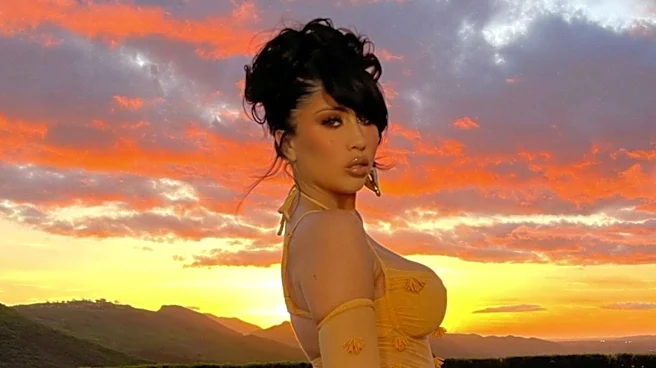

What's Happening?
Gen Z has introduced a new signature photo pose, dubbed the 'bob rest,' 'breast rest,' or 'Mam Hand,' which involves placing one or both hands across the chest. This trend is gaining traction online and among celebrities such as Kylie Jenner, Dua Lipa,
Hailey Bieber, and Zendaya, who have been photographed using variations of the stance. The pose is seen as a successor to the millennial 'teapot' pose, where one hand rested on the hip. While some find the 'bob rest' natural and effortless, others view it as overly suggestive and attention-seeking. The pose can range from a light touch near the collarbone, drawing attention to accessories, to a more pronounced placement that some critics deem inappropriate. Social media users and photographers note that the pose's interpretation can vary based on its execution, conveying anything from grace to a bold statement of body comfort.
Why It's Important?
The emergence of the 'bob rest' pose highlights the evolving dynamics of social media trends and generational expression in the U.S. It reflects Gen Z's distinct approach to self-presentation and online identity, often characterized by a desire for authenticity and a challenge to conventional norms. The debate surrounding the pose's suggestiveness underscores broader societal discussions about body image, modesty, and the influence of celebrity culture on younger generations. For brands and marketers, understanding such trends is crucial for effective engagement with Gen Z, a demographic known for its digital fluency and influence on consumer culture. The rapid adoption and subsequent criticism of the pose also illustrate the accelerated cycle of trends and public discourse in the age of social media, where new behaviors can quickly become viral and subject to widespread commentary.
What's Next?
The 'bob rest' pose is likely to continue its spread across social media platforms, with more individuals and celebrities adopting and adapting it. The ongoing debate about its appropriateness will probably intensify, leading to further discussions on online etiquette and generational differences in self-expression. We may see brands and influencers either embrace or distance themselves from the pose, depending on their target audience and brand image. As with past viral trends, the 'bob rest' may eventually be replaced by another signature pose as Gen Z continues to innovate and redefine online aesthetics. The trend could also inspire new forms of parody or artistic interpretation, further embedding itself in contemporary pop culture. The discourse around the pose may also prompt social media platforms to review their content guidelines regarding suggestive imagery.
Beyond the Headlines
Beyond its immediate viral appeal, the 'bob rest' pose touches upon deeper cultural and psychological aspects of self-representation in the digital age. It reflects a generation that is highly conscious of its online image and actively seeks to differentiate itself from previous generations. The pose can be interpreted as a form of reclaiming agency over one's body and challenging traditional notions of femininity, or conversely, as a symptom of an increasingly sexualized online environment. The strong reactions, both positive and negative, reveal underlying tensions between different generational values and perceptions of public display. This trend also highlights the power of social media in shaping collective behaviors and aesthetic preferences, demonstrating how a simple physical gesture can become a significant cultural marker and a subject of widespread social commentary.