



What's Happening?
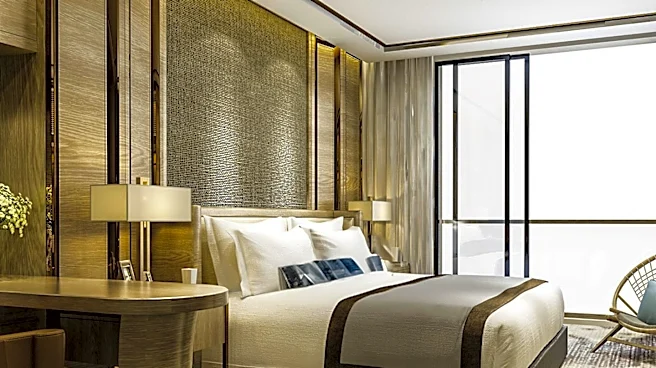
Brands are increasingly leveraging hotels and resorts as experiential showrooms to market their products and connect with new audiences. This strategy involves setting up pop-ups, equipping hotel rooms with their products, and organizing influencer events
within these hospitality settings. For example, American fashion designer Lela Rose hosted an après-ski pop-up at Caldera House in Wyoming, offering curated Western merchandise. Similarly, heat pump company Quilt installed its products in rooms at Madrona Hotel in California and Hotel Lilien in New York, allowing guests to experience them firsthand. Public Goods, a brand offering refillable toiletries, has seen a significant increase in new customers who first discovered their products through Airbnb or hotel stays. This approach capitalizes on the relaxed and receptive mindset of travelers, who are often more open to trying new things during their vacations.
Why It's Important?
This trend is significant for the retail and marketing industries as it represents a shift away from traditional, often crowded, marketing channels. By using hotels as showrooms, brands can create immersive experiences that allow potential customers to interact with products in a natural, low-pressure environment. This is particularly effective for products that benefit from hands-on experience, such as toiletries or home appliances, where guests can evaluate quality and design over an extended period. For brands, it offers a unique opportunity to reach a captive audience that is often in a positive and receptive mood, leading to higher engagement and conversion rates. For hotels, these partnerships can enhance guest experience, provide additional amenities, and potentially generate new revenue streams, making them more attractive to travelers seeking unique stays.
What's Next?
The integration of brands into hotel environments is expected to grow, with more diverse industries exploring these partnerships. We may see an increase in long-term collaborations where brands become permanent fixtures in hotel rooms or common areas, offering guests continuous exposure to their products. The use of data analytics from these hotel activations could also become more sophisticated, allowing brands to tailor their offerings and marketing messages more effectively. Furthermore, the influencer marketing aspect within hotel settings is likely to expand, with brands creating more elaborate and engaging experiences for content creators. This strategy could also lead to the development of specialized 'brand experience hotels' where the entire property is designed around showcasing various products and services, blurring the lines between hospitality and retail even further.
Beyond the Headlines
This phenomenon highlights a broader evolution in consumer behavior, where authenticity and experience are paramount. Consumers are increasingly wary of traditional advertising and seek genuine interactions with brands. Hotels, by providing a curated and comfortable setting, offer an ideal platform for brands to build trust and demonstrate value in a non-intrusive way. This approach also taps into the psychological aspect of travel, where people are often more open to new ideas and products, associating them with positive vacation memories. The success of these partnerships underscores the importance of context in marketing, demonstrating that the 'where' and 'how' a product is encountered can be as crucial as the product itself in influencing consumer perception and purchasing decisions. It also points to a future where physical spaces, particularly those associated with leisure and comfort, become dynamic hubs for brand discovery and engagement.