






What's Happening?
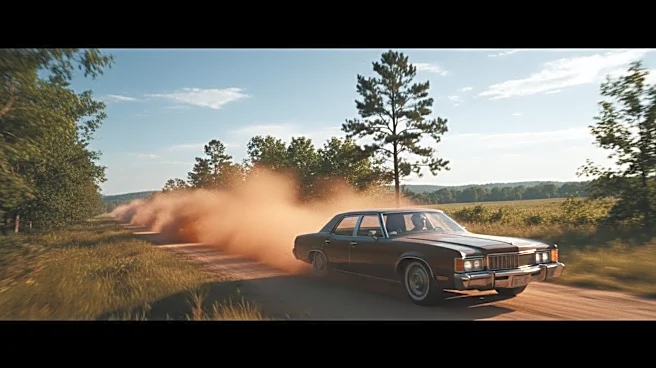
The 1973 action-adventure film 'White Lightning' starred Burt Reynolds as Gator McKlusky, a man convicted of running moonshine whiskey. McKlusky is offered a chance at release from jail if he agrees to become an informer and assist authorities in apprehending
his former associates. However, McKlusky accepts the offer with an ulterior motive: he believes the crooked sheriff, played by Ned Beatty, was responsible for the murder of his younger brother, a civil rights activist. The film follows McKlusky as he navigates his role as an informant, aided by a fellow informant and a daredevil driver, engaging in fights and stunt-driving chases to gather evidence against the sheriff. The cast also includes Jennifer Billingsley, Louise Latham, Diane Ladd, and a young Laura Dern in her film debut. The movie was directed by Joseph Sargent.
Why It's Important?
This film is important for its portrayal of a specific subculture in the American South during the 1970s, focusing on moonshine production and the complex relationship between local law enforcement and the community. It highlights themes of justice, revenge, and the moral ambiguities faced by individuals caught between the law and personal loyalties. The movie's action and adventure elements, particularly the car chases and stunts, were characteristic of the era and contributed to its appeal. Furthermore, 'White Lightning' is notable for featuring Burt Reynolds in a leading role that solidified his image as a rugged, anti-hero figure, a persona that resonated with audiences and influenced subsequent action films. The film also provides an early glimpse of talent like Laura Dern, who would later become a prominent actress.
What's Next?
While 'White Lightning' is a historical film, its continued availability on platforms like Prime Video suggests an ongoing interest in classic American cinema and the work of actors like Burt Reynolds. For viewers, this means continued access to a film that captures a particular moment in American filmmaking and cultural history. For film enthusiasts and scholars, it remains a subject of study for its genre conventions, character development, and its place within the careers of its cast and crew. The film's themes of justice and rebellion continue to be relevant, potentially sparking discussions about law enforcement, civil rights, and personal ethics in contemporary contexts.
Beyond the Headlines
Beyond its entertainment value, 'White Lightning' offers a window into the social and cultural landscape of the American South in the early 1970s. The film subtly touches upon the tensions between traditional rural life and the broader societal changes, including the civil rights movement, through the backstory of Gator McKlusky's brother. The depiction of moonshine running, while a plot device, also reflects a historical reality of illicit economies in certain regions. The film's gritty aesthetic and focus on a morally complex protagonist challenged simplistic notions of good versus evil, contributing to a more nuanced approach to character development in action cinema. Its enduring presence in streaming libraries underscores the lasting impact of such films on popular culture and their ability to reflect and shape societal narratives.