








What's Happening?
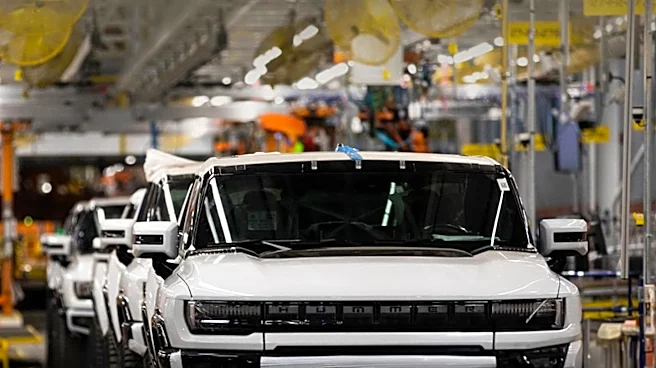
General Motors (GM) reported a 4.2% decline in its second-quarter sales for 2026, attributed to reduced demand for electric vehicles (EVs) and broader economic sentiment among consumers. This decline comes despite a forecasted rise in U.S. light-vehicle
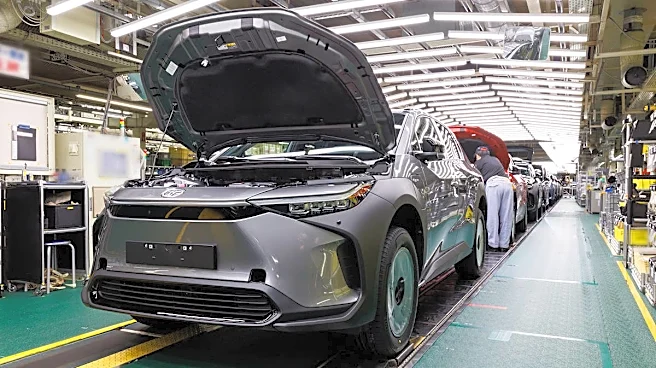
sales for June, which analysts predict will increase by 4.4 to 8 percent. The automotive industry is experiencing mixed results, with some brands like Toyota and Honda seeing gains due to a surge in hybrid vehicle sales, while GM faces challenges in the EV market.
Why It's Important?
GM's sales decline highlights the challenges facing the automotive industry, particularly in the transition to electric vehicles. Consumer sentiment and economic conditions play a significant role in purchasing decisions, and GM's performance may reflect broader hesitancies in the market towards EV adoption. This trend could impact GM's strategic focus on electric vehicles and influence its market positioning against competitors who are capitalizing on hybrid technology. The company's performance is a bellwether for the automotive sector's adaptation to changing consumer preferences and economic conditions.
What's Next?
GM may need to reassess its strategy in the EV market, potentially increasing its focus on hybrid models or enhancing its EV offerings to better align with consumer expectations. The company will likely monitor economic indicators closely to adjust its production and marketing strategies. The broader automotive industry will continue to navigate the balance between traditional and electric vehicle offerings, with consumer sentiment and regulatory developments playing pivotal roles.