







What's Happening?
Novo Nordisk, a leading pharmaceutical company known for its diabetes and obesity treatments, has filed a lawsuit against Eli Lilly in the U.S. District Court in New Jersey. The lawsuit accuses Eli Lilly of engaging in false advertising practices that
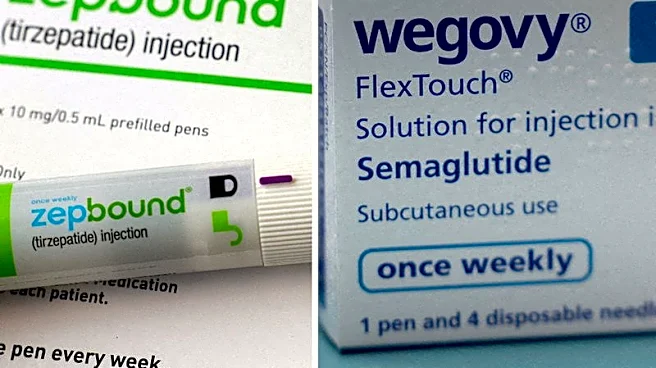
mislead millions of Americans living with obesity and type 2 diabetes. Novo Nordisk claims that Eli Lilly's advertising campaigns for its drugs Mounjaro and Zepbound rely on outdated studies, comparing the highest doses of Eli Lilly's medications with lower doses of Novo Nordisk's products. The Danish company argues that these advertisements violate federal and state false advertising and unfair competition laws. Eli Lilly, however, defends its advertising, stating that it is based on the strongest available scientific evidence, including the SURMOUNT-5 clinical trial, which directly compares the weight-loss effects of tirzepatide and semaglutide.
Why It's Important?
This legal battle between two pharmaceutical giants highlights the competitive nature of the weight-loss drug market, which is of significant interest to millions of Americans dealing with obesity and related health issues. The outcome of this lawsuit could have substantial implications for advertising practices within the pharmaceutical industry, potentially leading to stricter regulations and oversight. If Novo Nordisk succeeds, it may set a precedent for how companies can market their products, emphasizing the need for accurate and up-to-date scientific evidence in advertising claims. This case also underscores the importance of transparency and ethical marketing in the healthcare sector, which directly impacts consumer trust and public health outcomes.
What's Next?
Novo Nordisk is seeking a permanent injunction to stop Eli Lilly from continuing its current advertising practices and is demanding a corrective advertising campaign. If Eli Lilly does not voluntarily remove the advertisements, Novo Nordisk plans to request an immediate court order to block them. The legal proceedings will likely involve detailed examinations of the scientific evidence supporting each company's claims, potentially influencing future marketing strategies and regulatory policies in the pharmaceutical industry.