





What's Happening?
Konami Digital Entertainment, a prominent Japanese video game publisher, has re-established a U.S. office dedicated to the full-scale sales of its arcade games in North America. This move signifies Konami's official return to the Western arcade market,
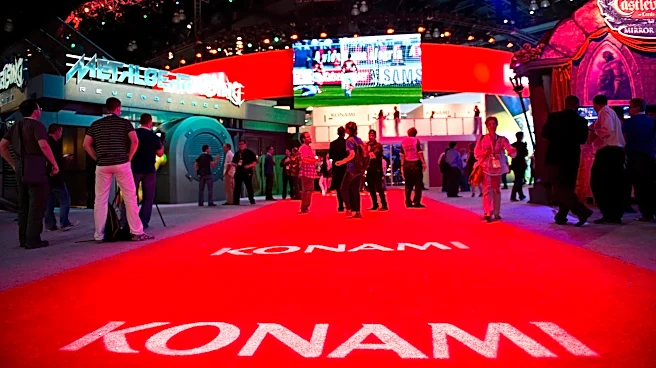
a development that has been anticipated since late 2024. Historically, Konami's presence in the North American arcade scene has varied, with an initial U.S. office opening in 1983 that later wound down in the early 2000s. While some Konami arcade games, such as Silent Hill Arcade and Castlevania, were previously available in limited quantities through its European subsidiary, and more recently through a special relationship with Round1USA, this new office aims to make their titles broadly accessible. The announcement was highlighted at IAAPA 2026, where Konami showcased its games at its own booth and in collaboration with major distributors like GENDA Americas/Player One Amusement Group. Currently, Konami is working with Save Point for rhythm game distribution and Player One Amusement Group for other products, with a stated openness to adding more distributors.
Why It's Important?
Konami's re-entry into the North American arcade market is significant for several reasons. For arcade operators across the U.S., it means broader access to popular Konami titles like 'Dance Dance Revolution World' and 'Jubeat U’nit,' which were previously difficult to obtain or limited to specific venues. This increased availability could revitalize the arcade industry by offering fresh, in-demand content, potentially drawing more customers to arcade locations. For consumers, it translates to more opportunities to experience these games outside of niche locations. The move also signals Konami's renewed commitment to the U.S. market, potentially leading to more localized content and faster releases of new games. While there's a current lead time of 4-6 months for orders, Konami is actively working to reduce this, indicating a long-term strategy for growth and market penetration. The company's approach, including revenue-share models for games like 'Demon Slayer Nichirin Battle Slash,' suggests an adaptive strategy to meet market demands and foster wider placement of its products.
What's Next?
Following the re-establishment of its U.S. office, Konami is expected to expand its distribution network beyond its current partners, Save Point and Player One Amusement Group, as indicated by their openness to adding more distributors. This expansion will likely make their arcade games even more accessible across various U.S. locations. The company is also focused on reducing the current 4-6 month lead time for game orders to meet demand more efficiently. Konami plans to continue showcasing its offerings at upcoming industry events, such as Amusement Expo, which will provide further opportunities for operators to explore and acquire their games. The success of this re-entry in North America could also influence Konami's strategies in other international markets, potentially leading to increased possibilities for their arcade division globally. New titles like 'Jubeat U’nit' are expected to launch in the U.S. shortly after their Japanese release, marking a more synchronized global release strategy for Konami's rhythm games.
Beyond the Headlines
Konami's return to the North American arcade market represents more than just a business expansion; it signifies a potential resurgence for the traditional arcade experience in the U.S. In an era dominated by home consoles and mobile gaming, the re-introduction of major arcade titles from a renowned publisher like Konami could help re-establish arcades as viable entertainment destinations. This move could also spark renewed interest in physical, social gaming experiences, contrasting with the often solitary nature of digital gaming. The inclusion of games like 'Dance Dance Revolution World' with American pop music and card-vending games like 'Demon Slayer Nichirin Battle Slash' tailored for a younger audience, demonstrates Konami's strategic effort to cater to diverse segments of the U.S. market. This could lead to a broader cultural impact, bringing back a sense of nostalgia for older generations while introducing a new generation to the unique appeal of arcade gaming, fostering community and competitive play in a shared physical space.