









What's Happening?
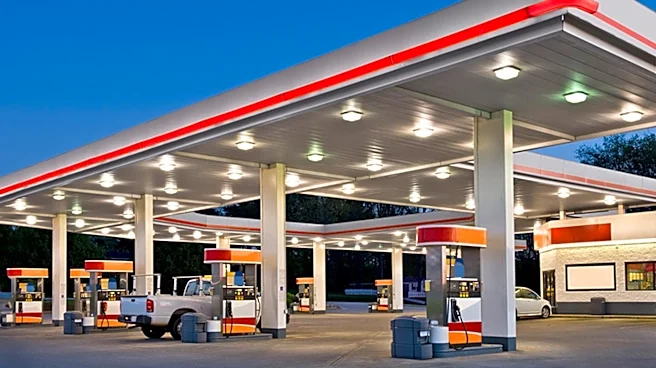
The University of Michigan's latest survey indicates a significant increase in U.S. consumer sentiment, attributed to a decrease in gas prices. The survey, released on Friday, shows a 10% rise in consumer sentiment, reaching a preliminary reading of 54.4,
the highest since February. Joanne Hsu, the survey's director, noted that this increase was observed across various demographic groups, including age, income, wealth, and political affiliation. Despite this improvement, consumer sentiment remains 12% lower than a year ago, reflecting ongoing economic concerns. The sentiment recovery follows a record low in May, driven by the conflict with Iran, which had previously caused energy prices to soar. However, the sentiment remains below pre-conflict levels, and its future trajectory is uncertain due to the ongoing Middle East tensions.
Why It's Important?
The rise in consumer sentiment is a positive indicator for the U.S. economy, suggesting that easing gas prices are providing some relief to consumers. However, the sentiment's volatility highlights the economy's sensitivity to geopolitical events, particularly in the energy sector. While consumer sentiment is not always a reliable predictor of spending behavior, it can influence economic activity. The current sentiment improvement may not translate into increased spending, as retail growth remains modest. The labor market's stability, with low unemployment rates, continues to support consumer spending capacity. Nevertheless, the persistent high cost of living and inflation expectations remain challenges, potentially affecting long-term economic confidence.
What's Next?
The future of consumer sentiment will largely depend on the resolution of the Middle East conflict and its impact on energy markets. A stabilization in energy prices could further boost sentiment, while continued tensions may reverse recent gains. Economic stakeholders, including policymakers and businesses, will closely monitor these developments. The labor market's health will also play a crucial role in sustaining consumer spending. As the situation evolves, adjustments in economic policies may be necessary to address inflation and support consumer confidence.