





What's Happening?
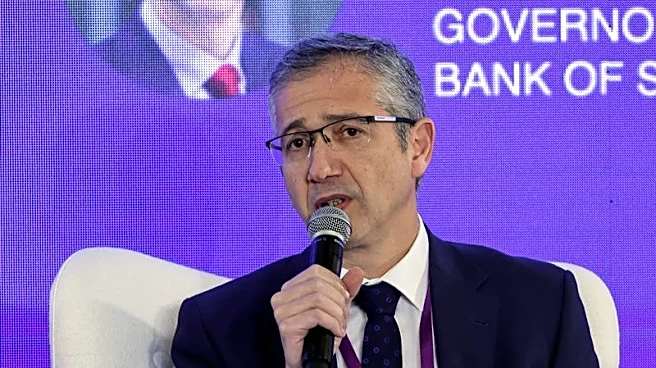
At the Jackson Hole symposium on August 28, 2026, Pablo Hernández de Cos, a leading candidate for the European Central Bank (ECB) presidency, voiced significant reservations regarding stablecoins. De Cos stated that dollar-backed stablecoins are not a credible
means of payment for large-scale transactions. He argued that their widespread adoption outside the United States could diminish other nations' control over their monetary policy, raising concerns about sovereignty and payment oversight. He also highlighted limitations in central bank currency conversions and the importance of anti-money laundering controls. Instead of stablecoins, De Cos expressed a preference for tokenized commercial bank deposits. This system would allow banks to utilize blockchain technology for fund transfers while settling payments through their existing central bank reserves. This approach, he believes, modernizes the financial system by integrating technological innovation with traditional banking structures, preserving the role of banks while leveraging blockchain for efficiency.
Why It's Important?
De Cos's stance is significant as it signals a potential direction for European monetary policy under his leadership, impacting the future of digital payments and the role of traditional financial institutions. His skepticism towards dollar-backed stablecoins reflects a broader concern among central bankers about maintaining monetary sovereignty and financial stability in an increasingly digital economy. If adopted, his preference for tokenized bank deposits could lead to a more integrated and regulated digital finance ecosystem within Europe, potentially influencing global standards. This approach could strengthen the position of commercial banks in the digital age, as they would remain central to the payment system, rather than being disintermediated by private digital currencies. For the U.S., this perspective from a potential ECB head could influence international discussions on digital currency regulation and the global role of the dollar, particularly if other central banks adopt similar views on limiting the influence of foreign-backed stablecoins.
What's Next?
If Pablo Hernández de Cos is confirmed as the next ECB president, his stated preferences will likely guide the institution's strategy on digital currencies and financial innovation. This could involve increased focus on developing frameworks for tokenized bank deposits and potentially accelerating the development and implementation of a digital euro. The ECB may also intensify its regulatory scrutiny of stablecoins, particularly those pegged to foreign currencies like the U.S. dollar, to mitigate perceived risks to monetary policy control and financial stability. This direction could prompt commercial banks in Europe to explore and invest more heavily in blockchain-based solutions for deposit tokenization. Internationally, De Cos's views could influence other central banks and regulatory bodies to adopt similar cautious approaches to private digital currencies, potentially leading to a more fragmented global digital asset landscape where national sovereignty over monetary policy is prioritized.
Beyond the Headlines
The debate over stablecoins versus tokenized bank deposits touches upon fundamental questions of financial control, innovation, and the future of money. De Cos's preference for tokenized deposits reflects a desire to evolve the financial system without abandoning its foundational principles, particularly the central role of commercial banks and central bank oversight. This approach highlights a tension between fostering innovation in digital payments and preserving traditional monetary policy tools and financial stability mechanisms. The concern about dollar-backed stablecoins weakening national monetary control also underscores geopolitical dimensions of digital currencies, where the dominance of one national currency in the digital realm could have significant economic and political implications for other nations. This discussion is not just about technology but about the very architecture of global finance and the balance of power within it, potentially leading to a future where digital currencies are more closely tied to national banking systems rather than independent private entities.