


What's Happening?
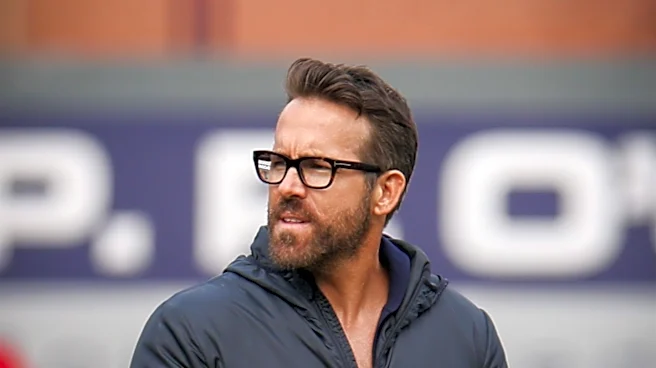
Ryan Reynolds and Rob McElhenney, co-owners of Wrexham AFC, have publicly acknowledged the departure of Humphrey Ker from the boards of both the football club and the Wrexham AFC Foundation. Ker's exit concludes a five-year involvement that significantly
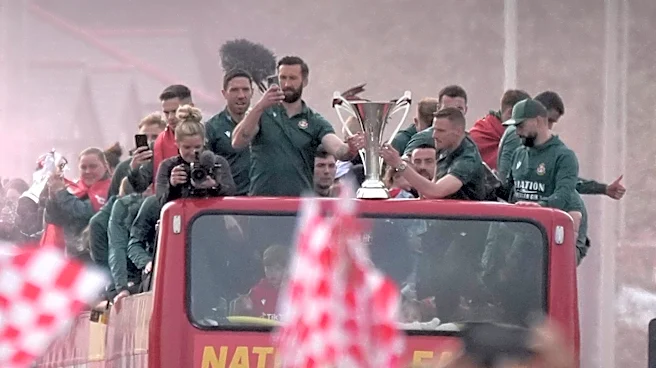
influenced the club's recent history. Reynolds stated that his involvement with Wrexham AFC would not have happened without Ker's introduction. Both owners paid tribute to Ker, highlighting his foundational presence, deep love for the club and community, and tireless devotion. Ker was instrumental in bringing Reynolds and McElhenney to Wrexham before the 2021 takeover, acting as a key architect behind the scenes. He has been a familiar figure to supporters, serving as a board member, ambassador, and a prominent personality in the 'Welcome to Wrexham' documentary series, bridging the gap between ownership and fans. His departure comes during a period of unprecedented success for Wrexham AFC, which has achieved three consecutive promotions and significantly grown its global profile.
Why It's Important?
The departure of Humphrey Ker marks a significant transition for Wrexham AFC, a club that has garnered considerable international attention, particularly in the U.S., due to its Hollywood ownership. Ker's role as a bridge between the celebrity owners and the local community was crucial in maintaining authenticity and fostering goodwill, which is vital for any sports franchise, especially one undergoing such a high-profile transformation. His influence in introducing Reynolds and McElhenney to the club underscores the importance of key individuals in facilitating major investments and strategic partnerships. For U.S. audiences following the Wrexham story, Ker represented a tangible link to the club's roots and its journey. His absence could shift dynamics within the club's leadership and its public relations strategy, potentially requiring Reynolds and McElhenney to take on more direct roles in community engagement and day-to-day operations, or to find a new figure to fill this critical liaison position. The continued success of Wrexham AFC, even with this change, will be a test of the foundational structures Ker helped establish.
What's Next?
Following Humphrey Ker's departure, Wrexham AFC will need to navigate this transition while maintaining its momentum. The club's leadership, primarily Ryan Reynolds and Rob McElhenney, will likely continue to emphasize their commitment to the club and its community, potentially through increased public appearances or statements. The search for a new individual to fill a similar liaison or strategic role could be initiated, or existing board members may absorb Ker's responsibilities. The 'Welcome to Wrexham' documentary series, which has been a major factor in the club's global appeal, may also address Ker's exit in future seasons, providing insight into the internal dynamics of the club. The long-term impact on fan engagement and community relations will depend on how effectively the club communicates and manages this change. The focus will remain on Wrexham's performance on the field and its continued growth in global recognition, with the ownership ensuring that the foundational elements Ker helped build remain strong.
Beyond the Headlines
Humphrey Ker's role at Wrexham AFC highlights the often-underestimated importance of cultural intermediaries in cross-cultural business ventures, particularly in sports. His ability to connect Hollywood owners with a working-class Welsh football club demonstrates how individuals with deep understanding of both worlds can facilitate successful partnerships. This situation also underscores the evolving nature of sports ownership, where celebrity involvement can bring unprecedented global exposure but also necessitates careful management of local traditions and fan expectations. The narrative of Wrexham's rise, heavily influenced by Ker's contributions, serves as a case study in how strategic communication and genuine community engagement can transform a struggling entity into a global phenomenon. His departure, while amicable, prompts reflection on the sustainability of such rapid growth and the critical human elements that underpin it, beyond just financial investment and celebrity appeal. It also raises questions about succession planning in unique ownership structures.