








What's Happening?
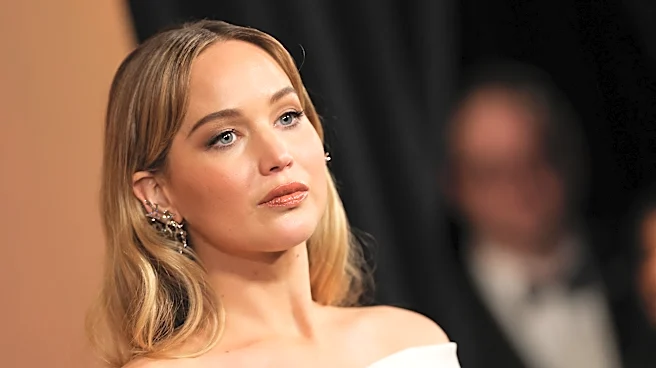
Actress Jennifer Lawrence recently appeared on the 'Call Her Daddy' podcast, where she openly discussed the struggles and anxieties associated with motherhood. Lawrence, who recently welcomed her second son with her husband, art gallerist Cooke Maroney,
shared her experiences with postpartum anxiety and the pervasive feeling of guilt. She expressed a constant internal struggle, stating, 'I'm so ruled by guilt. I'm trying not to be.' Lawrence articulated the common maternal dilemma of feeling like one is 'never doing enough' or 'never there enough,' while also worrying about children becoming 'too attached.' She highlighted the difficulty of self-praise in the demanding role of a mother, despite knowing she is a good one. Lawrence also emphasized the crucial support she found within the 'mom community,' recounting an instance where a fellow mother offered comfort and assistance during a period of severe postpartum anxiety after her second child.
Why It's Important?
Jennifer Lawrence's candid discussion about the challenges of motherhood, particularly postpartum anxiety and guilt, is significant for several reasons. As a high-profile public figure, her openness helps destigmatize these common yet often unspoken experiences among mothers in the U.S. Her testimony can validate the feelings of countless women who grapple with similar emotions, fostering a sense of shared experience and reducing isolation. This conversation contributes to a broader societal dialogue about the realities of parenting, moving beyond idealized portrayals and acknowledging the mental and emotional toll it can take. By highlighting the importance of the 'mom community,' Lawrence underscores the critical role of social support networks in maternal well-being, which can encourage more women to seek or offer help. This public discourse can also prompt greater awareness and potentially better support systems for new mothers in healthcare and community settings.
What's Next?
Jennifer Lawrence's continued public sharing of her motherhood journey could inspire more open conversations about parental mental health. As she continues her career, her perspective as a mother of two may influence her future projects or advocacy efforts. The 'Call Her Daddy' podcast, known for its wide reach, will likely amplify these discussions, potentially leading to increased awareness and support for postpartum mental health initiatives. The emphasis on the 'mom community' might encourage the formation or strengthening of local support groups and online forums for mothers. This public dialogue could also influence how media portrays motherhood, moving towards more realistic and nuanced representations. For Lawrence herself, her personal experiences will undoubtedly continue to shape her public persona and potentially her philanthropic endeavors related to family and mental health.
Beyond the Headlines
Beyond the immediate impact of Jennifer Lawrence's interview, her comments touch upon deeper societal expectations placed on mothers. The 'guilt' she describes is often a product of cultural pressures that demand perfection in parenting, leading to feelings of inadequacy. Her experience with postpartum anxiety, a common but often under-diagnosed condition, highlights systemic gaps in maternal healthcare and mental health support. The reliance on informal 'mom communities' for support, while valuable, also points to a need for more formalized and accessible resources. This conversation can spark a re-evaluation of work-life balance for parents, particularly mothers, and challenge the notion that women must seamlessly juggle career and family without emotional strain. Ultimately, Lawrence's honesty contributes to a cultural shift towards greater empathy and understanding for the complexities of modern motherhood, advocating for a more supportive environment for all parents.