



What's Happening?
Ten years ago, Israeli artist Yoram Raanan's studio in Moshav Beit Meir in the Jerusalem Hills was destroyed by a wildfire, consuming over 1,500 paintings accumulated over four decades. The fire, initially suspected arson, was later attributed by investigators
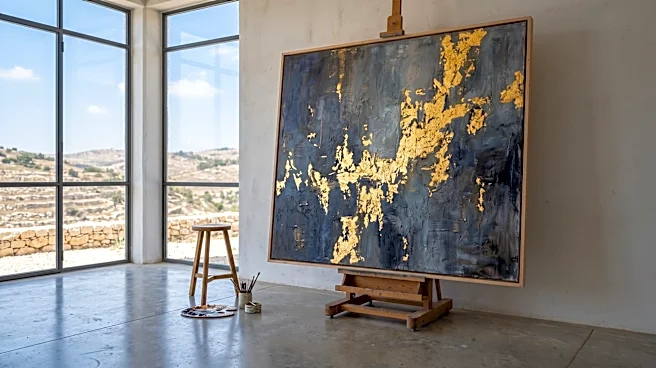
to a flare fired by Border Police during an operation. Despite the immense loss, Raanan's wife, Meira, noted his extraordinary faith and acceptance from the outset. A decade later, a Thanksgiving celebration was held at his rebuilt studio, surrounded by new, spiritually inspired paintings. Raanan, born in New Jersey, arrived in Israel 50 years ago and found his home there, eventually settling in Beit Meir. The fire profoundly influenced his art, leading to the incorporation of darker tones and prominent gold, symbolizing a new light emerging from darkness. The event also spurred the completion of his book, 'Art of Revelation: A Visual Encounter with the Jewish Bible,' which was made possible by digital images saved on a hard drive.
Why It's Important?
This story highlights the resilience of the human spirit and the transformative power of art in the face of adversity. For the art world, Raanan's experience demonstrates how personal tragedy can lead to profound artistic evolution, introducing new themes and techniques into an artist's body of work. His ability to find beauty amidst destruction and his unwavering faith offer a compelling narrative of hope and renewal. The completion of his book, 'Art of Revelation,' despite the loss of original works, underscores the importance of digital preservation in safeguarding cultural and artistic heritage. The narrative also touches upon the deep connection between faith, identity, and artistic expression, particularly within the context of Jewish art, as described by philosopher Michael Chighel and curator Nurit Sirkis-Bank.
What's Next?
Raanan continues to create art, with his post-fire works reflecting a deeper authenticity and willingness to take greater chances, aiming for more meaningful expressions. The celebration of his artistic rebirth suggests ongoing recognition and appreciation for his work within the art community and among admirers. His story may continue to inspire others facing personal or creative setbacks, emphasizing the potential for renewal and growth. The themes of gratitude and faith, central to his recent celebration, are likely to remain integral to his artistic philosophy and public engagements. Future exhibitions and publications could further explore the evolution of his art since the fire and its impact on his spiritual and creative journey.
Beyond the Headlines
The narrative extends beyond a simple story of loss and recovery, delving into the philosophical and spiritual dimensions of art. Michael Chighel's concept of 'Mazalism,' describing Raanan's technique of allowing paint to flow and then discovering meaning, suggests a partnership between the artist and a higher power. This approach challenges conventional artistic methods by embracing chance and experimentation as avenues for divine inspiration. The comparison of the studio's rebuilding to the Jewish Temple's reconstruction by Nurit Sirkis-Bank elevates the event to a spiritual metaphor, highlighting the enduring human need to rebuild and find meaning after devastation. The story also subtly underscores the importance of community and shared faith in supporting individuals through profound challenges, as evidenced by the gathering of family, friends, and admirers.