





What's Happening?
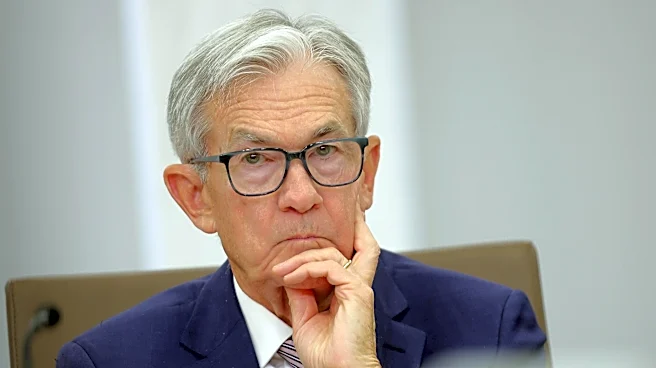
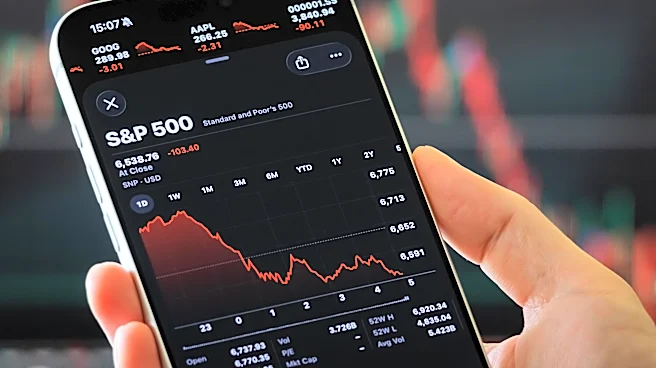
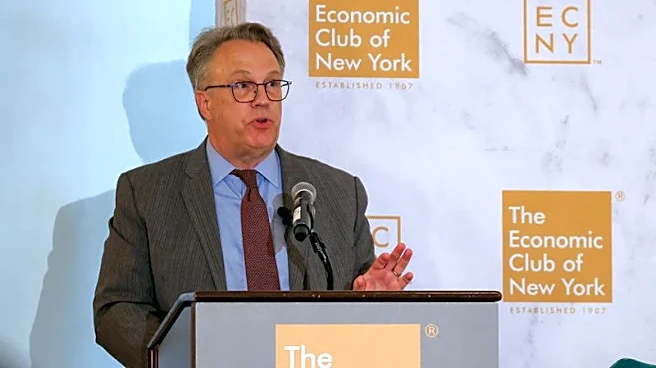
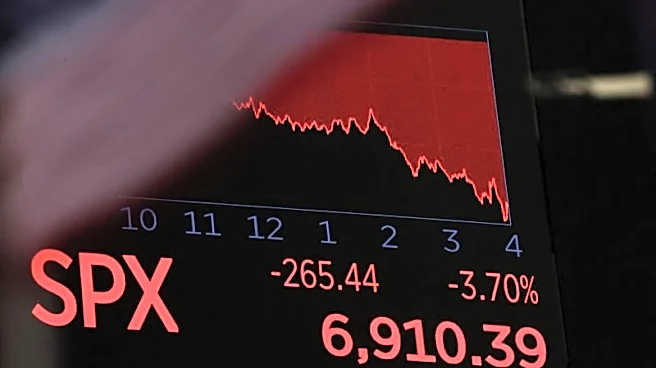
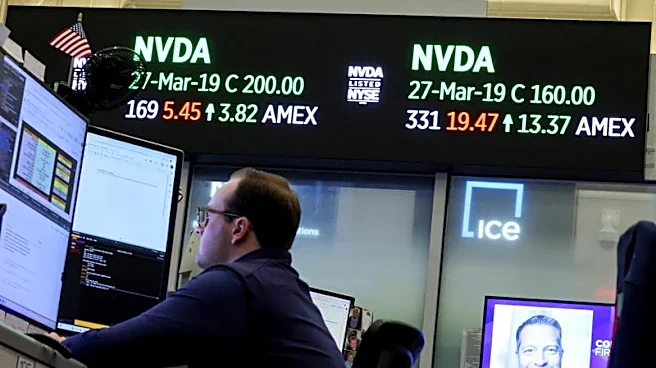
Federal Reserve Chairman Kevin Warsh is navigating a period of significant market volatility, with rate-hike expectations being whipsawed by the performance of Nvidia stock. According to Crypto Briefing, a near-50% slide in Nvidia shares on Friday led
to an easing of bets on further Fed tightening, while a 31.5% one-day rebound on Monday, following Jensen Huang's return as CEO, quickly restored market confidence in at least two more rate hikes. Warsh, who became Fed Chair on May 22, 2026, has adopted a communication style that advocates for reduced forward guidance, meaning the Fed provides less explicit information about its future policy moves. This approach, combined with inflation remaining above the Fed's 2% target, has left investors to fill the information gap with fast-moving data, such as Nvidia's stock performance, which is seen as a key indicator of AI investment and economic growth expectations.
Why It's Important?
The extreme sensitivity of rate expectations to the performance of a single stock like Nvidia underscores a critical challenge for the U.S. financial markets and the Federal Reserve. This tight coupling means that rate-sensitive investments now carry an additional layer of equity risk, as major swings in a prominent tech company can directly influence broader monetary policy outlooks. Chairman Warsh's 'quieter approach' to communication, while intended to encourage markets to look beyond short-term fluctuations, inadvertently amplifies the impact of such rapid data points. The reported influence of White House discussions on Jensen Huang's return to Nvidia also highlights a potential intersection of political involvement and corporate leadership in companies with significant economic sway, raising questions about market independence and the factors driving investor sentiment.
What's Next?
As long as inflation remains above the Federal Reserve's 2% target, the debate surrounding further interest rate hikes will continue to be a central focus for investors and policymakers. Chairman Warsh's commitment to reduced forward guidance suggests that market participants will need to remain highly vigilant to economic data and significant corporate developments, particularly within the influential tech sector, to anticipate the Fed's next moves. The ongoing volatility linked to major tech stocks like Nvidia indicates that these companies will continue to be closely watched as proxies for broader economic health and future monetary policy direction. The interplay between market performance, inflation targets, and the Fed's communication strategy will define the immediate future of U.S. monetary policy.
Beyond the Headlines
The phenomenon of a single company's stock performance dictating market-wide rate hike expectations reveals a deeper structural shift in the U.S. economy, where the fortunes of a few dominant tech players are increasingly intertwined with macroeconomic policy. This concentration of influence could lead to a more fragile financial system, where idiosyncratic risks in the tech sector could have systemic implications. Furthermore, the Fed's reduced forward guidance, while aiming for long-term stability, may inadvertently foster a short-term, reactive market environment. This approach challenges the traditional role of central banks in guiding expectations and could lead to increased speculation and uncertainty, making it harder for businesses and consumers to plan for the future. The ethical implications of political discussions influencing corporate leadership, especially in companies with such significant market impact, also warrant closer examination.