
What's Happening?
In recent weeks, more than six Chinese banks, including state-owned, joint-stock, and foreign institutions, have significantly raised U.S. dollar deposit rates. These rates have reached their highest levels
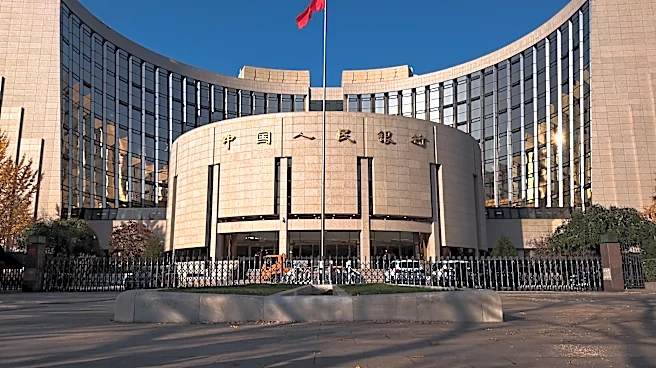
since 2023, with some exceeding those offered by U.S. banks. For instance, one state-owned bank's one-year rate topped 4.5% in late October, while another's one-year rate for balances over $50,000 now exceeds 4%, a 120 basis point increase since June. This move is a strategic effort to curb the appreciation of the Chinese yuan (RMB), which has risen nearly 5% against the dollar and 9% against the euro this year. The People's Bank of China (PBOC) also raised the foreign exchange deposit reserve ratio from 4% to 6% effective November 15, complementing these rate hikes by encouraging depositors and exporters to hold dollar positions and reduce RMB buying.
Why It's Important?
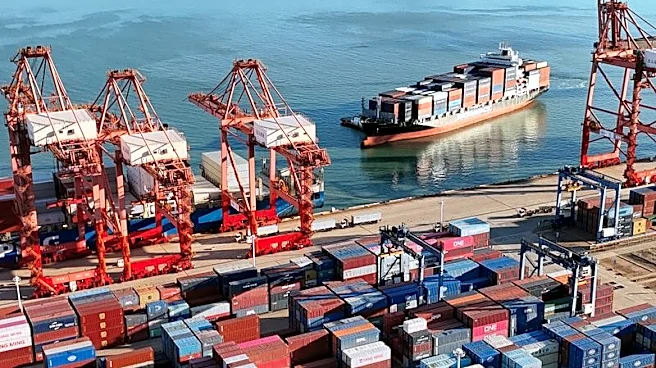
This coordinated action by Chinese banks and the PBOC is significant for several reasons. Firstly, it indicates a proactive measure by Chinese authorities to manage their currency's value, particularly to alleviate pressure on Chinese exporters whose median net margin is only 4.9%. A stronger RMB makes Chinese exports more expensive, potentially harming their competitiveness. Secondly, the move highlights the ongoing global currency dynamics and the strategic efforts by major economies to influence capital flows. By making dollar deposits more attractive, China aims to retain dollar funds within its banking system, which can help stabilize the RMB. This also reflects a broader 'dollarization vs. de-dollarization' battle, where China seeks to manage its exposure to the dollar while also promoting the international use of the yuan. The unusual scale and speed of these adjustments underscore the urgency of China's currency management objectives.
What's Next?
The impact of these measures will be closely watched in the coming months. If successful, the increased dollar deposit rates and higher reserve ratios could temper the RMB's appreciation, providing relief to Chinese exporters. However, the effectiveness will depend on various factors, including global economic conditions, U.S. monetary policy, and investor sentiment. The PBOC may continue to use a combination of policy tools, including interest rate adjustments and reserve requirements, to manage currency fluctuations. This situation could also influence trade relations between the U.S. and China, as currency valuation remains a sensitive topic. Businesses engaged in international trade with China will need to monitor these currency dynamics closely to assess their financial exposure and adjust their strategies accordingly.
Beyond the Headlines
Beyond the immediate economic implications, China's actions reflect a deeper strategic intent to assert greater control over its financial system and reduce its vulnerability to external economic pressures. By actively managing the RMB's value and influencing dollar flows, China is subtly pushing back against the dollar's global dominance, even as it acknowledges the need to manage its own currency's strength. This move could be interpreted as part of a long-term strategy to build a more resilient financial infrastructure that can operate with greater independence from the U.S. dollar. It also highlights the complex interplay between monetary policy, trade, and geopolitical objectives, where currency management becomes a tool for national economic security and influence on the global stage. The breaking of the de facto cap on state-owned banks' dollar rates signals a new level of assertiveness in China's financial policy.