







What's Happening?
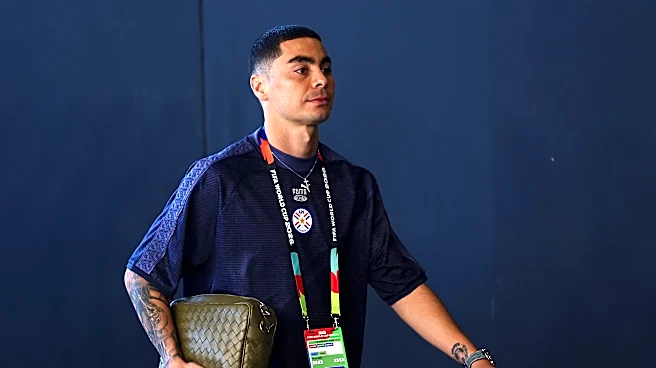
FIFA has introduced several new rules for the 2026 World Cup, causing confusion among players and fans. One of the most controversial rules allows referees to issue red cards to players who cover their mouths during confrontations, a measure aimed at preventing
players from hiding insults. This rule was highlighted when Paraguay's Miguel Almiron was sent off for covering his mouth while speaking to an opponent. Additionally, the tournament now includes five-second countdowns for set pieces and expanded powers for video assistant referees (VAR). These changes are part of FIFA's efforts to enhance the game's integrity and fairness.
Why It's Important?
The introduction of these new rules could significantly impact the dynamics of the World Cup, influencing how players interact on the field and how games are officiated. The rule against covering mouths aims to curb unsportsmanlike conduct, potentially reducing instances of verbal abuse. However, it also raises concerns about players' freedom of expression and the potential for misunderstandings. The expanded use of VAR and time restrictions on set pieces are designed to improve the flow of the game and ensure accurate officiating, but they may also lead to increased scrutiny and debate over refereeing decisions.
What's Next?
As the World Cup progresses, teams and players will need to adapt to these new regulations. Coaches may need to adjust their strategies to account for the stricter enforcement of conduct rules. The effectiveness and reception of these changes will likely be evaluated by FIFA and could influence future tournaments. Stakeholders, including players, coaches, and fans, may voice their opinions, potentially leading to further discussions on the balance between maintaining the sport's integrity and preserving its traditional elements.