





What's Happening?
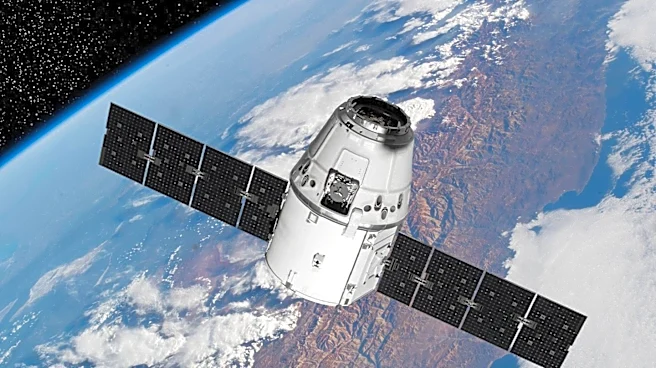
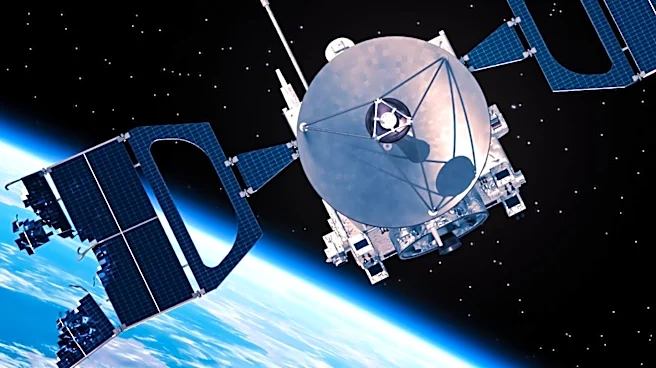
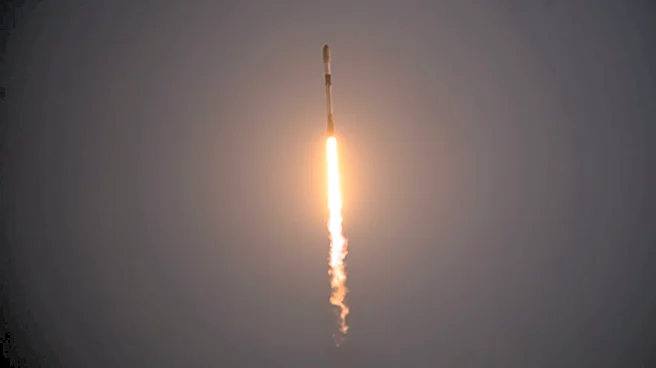
SpaceX, led by CEO Elon Musk, is set to launch its Starlink V3 satellites, which promise to deliver over 100 times the bandwidth of the current V2 system. This development is expected to significantly increase SpaceX's communications revenue, potentially
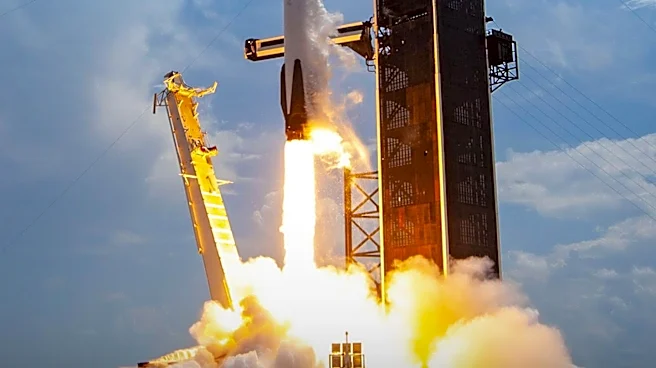
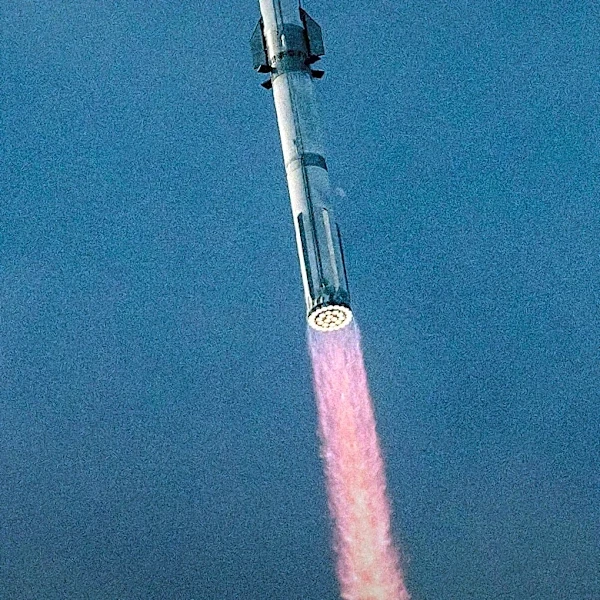
exceeding $200 billion annually. The V3 satellites will be launched on SpaceX's Starship, marking a substantial upgrade from the V2 satellites currently deployed via Falcon rockets. ARK Investment Management's Cathie Wood has praised the bandwidth increase as 'astonishing.' The rollout of these satellites is part of SpaceX's broader strategy to enhance global internet connectivity, with the potential for Starlink to become a major provider of internet services worldwide.
Why It's Important?
The introduction of Starlink V3 satellites represents a major advancement in satellite internet technology, potentially transforming global internet access. This could have significant implications for remote and underserved areas, providing them with high-speed internet access. Economically, the projected revenue increase for SpaceX underscores the growing importance of satellite internet in the telecommunications industry. The enhanced bandwidth capabilities could also drive competition and innovation in the sector, potentially leading to lower costs and improved services for consumers. Additionally, the success of Starlink V3 could bolster SpaceX's financial position, enabling further investments in space exploration and technology development.
What's Next?
SpaceX plans to continue deploying V3 and next-generation satellites, with the next Starship test flight scheduled soon. This mission will not only deploy upgraded Starlink satellites but also attempt the first-ever return and landing of the upper stage. As SpaceX accelerates its satellite deployment, the company may face regulatory and competitive challenges, particularly as it seeks to expand its market share in the global internet service industry. Stakeholders, including investors and telecommunications companies, will be closely monitoring the performance and impact of the V3 satellites.